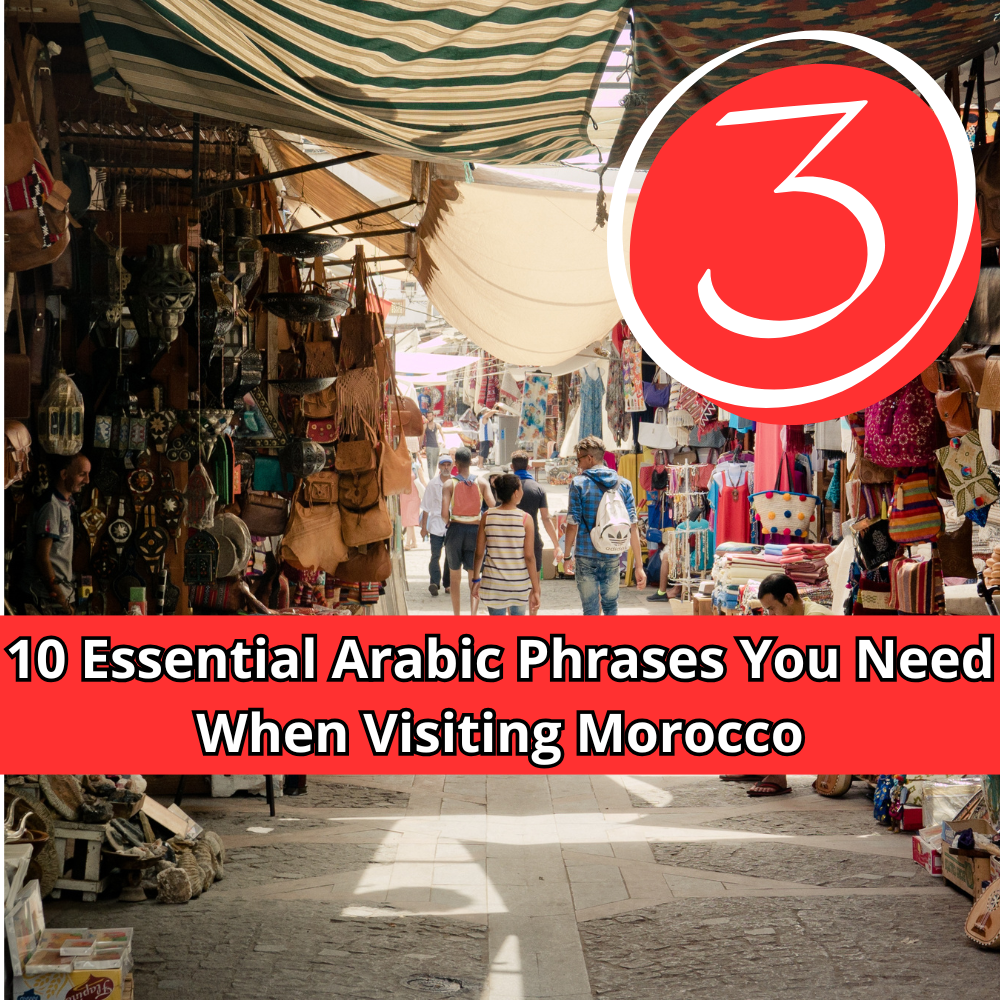
Connect in Morocco: Must-Know Arabic Phrases for Visitors Part 3
If you’ve already read Parts 1 and 2 of this series, you know how useful it can be to learn a few key Moroccan Arabic phrases before visiting Morocco. These aren’t textbook phrases. They’re what people actually say on the street, in the medina, in taxis, in cafes. They help you connect with Moroccans on a human level, not just get by as a tourist.
In the first two parts, we focused on greetings, basic questions, and polite expressions. You learned how to say hello, thank you, how much something costs, and how to ask for directions. These are the building blocks of everyday interaction. But the deeper you go into Moroccan culture, the more you realize that communication isn’t just about knowing a few words. It’s about knowing when, how, and why to use them.
Part 3 is about going beyond survival phrases. It’s about building real interactions. You’ll learn expressions that help you show respect, ask for help, join a conversation, or respond naturally to what someone says. These aren’t complex grammar points or long sentences. Just simple phrases that make a big difference.
As a language teacher and native speaker, I always tell my students this: if you use just five or six well-pronounced, well-timed Darija phrases, Moroccans will respond with warmth. They appreciate effort. You don’t have to speak perfectly. You just have to be willing to engage. That’s the difference between being a tourist and being a guest.
In Morocco, people are social. Conversations happen everywhere — in line at the bakery, with a taxi driver, or while drinking tea with strangers. Having the right phrase at the right time helps you take part. It opens doors. You start noticing that people smile more when you speak to them in their own words, even if it’s just one sentence.
So in Part 3, I’ll share more essential phrases you can use in real life — not just to get information, but to connect, participate, and respond like someone who belongs there. As always, I’ll explain each phrase clearly, with the pronunciation, the meaning, and the kind of situations where you can use it.
Phrase 1
Phrase 1: واش ممكن تعاونّي؟
Translation: Can you help me?
Transliteration: Wash mumkin tʿawnni?
This is one of the first phrases I recommend to any student preparing to visit Morocco. Not because it’s fancy or grammatically complicated — it’s not — but because you’ll need it. A lot. Whether you’re lost in a maze-like medina, struggling to find your bus, or trying to understand how something works, this phrase will come in handy. And more than that, it shows humility and openness — two things Moroccans appreciate.
Here’s what the phrase means, word by word. “واش” (wash) is how we introduce a yes/no question in Darija. It doesn’t have a direct English equivalent, but think of it as “do” or “is” at the start of a question. “ممكن” (mumkin) means “possible” or “can,” and “تعاونّي” (tʿawnni) is “you help me.” It’s a complete sentence. Natural. Polite. Direct.
Now about the pronunciation. The trickiest part for learners is the letter ʿayn in “تعاونّي.” It’s that deep sound that comes from the throat — not something English speakers are used to. You don’t need to pronounce it perfectly. Make an effort, get close enough, and people will understand. The point isn’t perfection. It’s communication.
This phrase works in almost every setting. Ask it in a shop if you can’t find something. Say it to someone if you’re stuck with your phone or directions. Use it when you need help ordering food or figuring out how to get to a certain place. It’s useful because it’s flexible. You don’t need to explain everything. Just ask: “واش ممكن تعاونّي؟” and most Moroccans will respond with kindness.
One thing I always tell my students — people in Morocco are generally open to helping others, especially when you ask in their language. It creates trust. It shows you’re not just passing through. You’re making the effort to connect.
You don’t need a long sentence. You just need this one, spoken clearly, with intention. Try it once. You’ll see the difference.
Phrase 2
Phrase 2: ما فهمتش
Translation: I didn’t understand
Transliteration: Ma fhemt-sh
You’ll hear this phrase a lot in Morocco, and you’ll probably say it even more. “ما فهمتش” is short, clear, and essential when learning Darija. It means “I didn’t understand,” and it works in almost any context — in a conversation, at a market, or when someone speaks too fast for you to follow.
Let’s break it down. “ما” means “not,” and “فهمت” means “I understood.” The “ـش” at the end is a negative suffix used in Moroccan Arabic. So literally, you’re saying “I not understood.” That’s how negation works in Darija — with both a prefix and a suffix.
Pronunciation is straightforward. Say “fhemt” quickly, almost like one syllable. Don’t pause between “ma” and “fhemt.” The “sh” at the end is soft, not like the strong English “sh.” Just enough to close the sentence.
Use this phrase when someone explains something and you get lost. Or if you’re at a café and the waiter lists five things too fast. Or when you ask a question, and the answer flies over your head. Just say, “ما فهمتش.” It’s honest and effective.
You can also add “عفاك” (ʿafak) after it — to make it more polite: “ما فهمتش، عفاك” (I didn’t understand, please). That softens the phrase and shows you’re still engaged in the conversation.
Saying you don’t understand isn’t a weakness. It’s the fastest way to learn. People will slow down, repeat, maybe even switch to French or English if they can. But they’ll appreciate that you’re trying to stay in the conversation, not escape it.
This phrase helps you stay present. It shows you’re listening, even if you’re not catching everything. Use it with confidence. Say it with a smile. Keep the conversation going.
Phrase 3
Phrase 3: شحال هادي؟
Translation: How long ago was that?
Transliteration: Sh-hal hadi?
You won’t find this phrase in textbooks, but it’s one of the most common questions people ask in everyday Moroccan conversations. “شحال هادي؟” literally means “how much time has passed?” or more naturally, “how long ago was that?”
You’ll hear it when people talk about events — when something happened, how long ago someone arrived, how long a shop has been closed, or how long it’s been since it last rained. You can also use it to ask about more personal things, like “How long ago did you get here?” or “When did you last visit?”
The phrase is made up of two parts:
- “شحال” (sh-hal) means “how much” or “how many.”
- “هادي” (hadi) refers to the past time period, like “since then” or “ago.”
Pronounce it as one phrase: sh-hal hadi? Don’t break it into two separate words. The rhythm is fast, casual, and smooth. Keep it short and confident.
Let’s say someone tells you they visited Fes recently. You can ask: “شحال هادي؟”
Or if a shopkeeper says, “This product hasn’t come in for a while,” you can follow up with: “شحال هادي؟”
There’s no need to be formal. This is how people actually talk. And once you start using it, you’ll hear it everywhere.
If someone answers with a time reference — like “عام” (a year), “سيمانة” (a week), or “شهر” (a month) — that’s your cue to keep listening. You’re now part of the conversation.
Phrases like this turn small talk into real interaction. They help you ask questions that go beyond the surface.
Use it. Try it. “شحال هادي؟” gets you more than just an answer — it shows you care about the story.
Phrase 4
Phrase 4: ماشي مشكل
Translation: No problem
Transliteration: Mashi mushkil
This is one of the most common phrases you’ll hear in Morocco. It means “no problem,” and it works in all kinds of situations. Someone bumps into you, they apologize, you say “ماشي مشكل.” Someone is late, they say sorry, you respond with “ماشي مشكل.” Someone thanks you for your help, and again — “ماشي مشكل.”
It’s a way to show that things are okay, that you’re not upset, and that you’re easygoing. It’s short, casual, and polite.
Let’s look at the words. “ماشي” means “not” or “it’s not.” “مشكل” comes from the word mushkil, which means “problem.” Put them together — “not a problem.”
Pronunciation is simple. Just say it the way it looks: ma-shee mush-kil. Keep it light and relaxed. In Moroccan Arabic, the rhythm matters more than exact pronunciation. If you sound calm, it works.
You’ll hear this phrase in taxis, shops, cafés, and homes. It’s one of those things Moroccans say almost automatically. It makes interactions smoother, especially when something small goes wrong.
It’s also useful if someone is nervous about making a mistake in front of you. Let’s say you ask for help and they can’t explain well. You can reassure them with “ماشي مشكل.” It shows kindness and removes tension.
It works the other way too. If you make a mistake — mispronounce a word, hand over the wrong bill, or knock something over — and they say “ماشي مشكل,” they’re telling you: don’t worry about it.
This is a phrase that signals comfort and patience. It makes conversations easier. It makes you more approachable.
Use it freely. Moroccans do.
Phrase 5
Phrase 5: فين المحطة؟
Translation: Where is the station?
Transliteration: Fin l-maḥaṭṭa?
This phrase is short, direct, and useful in every Moroccan city. Whether you’re looking for the bus station, train station, or even a taxi stand, this is the go-to question: “فين المحطة؟”
Let’s break it down. “فين” means “where.” It’s one of the first question words you should learn in Darija. “المحطة” means “the station.” Depending on context, it could refer to different types of stations — train (محطة القطار), long-distance bus (محطة الحافلات), or grand taxi (محطة الطاكسيات).
The pronunciation is simple: fin l-maḥaṭṭa?
Emphasize the strong ḥ (the Arabic letter ḥa) — it’s a sound from deep in the throat, not like the English “h.” The double “ṭ” is a heavier “t” sound. Just say it naturally, and Moroccans will understand.
Use this question when you’re trying to get around. For example:
- You’re in Marrakech and want to catch a train to Casablanca → Ask: “فين المحطة؟”
- You’re in Chefchaouen and looking for the bus terminal → Same phrase.
If you want to be more specific, you can add details:
- “فين المحطة ديال الطوبيس؟” (Where is the bus station?)
- “فين المحطة ديال الطاكسيات؟” (Where is the taxi stand?)
But just saying “فين المحطة؟” is enough in most cases. People will either point, explain, or even walk with you to show you the way. Moroccans are used to helping travelers, especially when you try to speak their language.
This phrase shows you’re not just following a map. You’re interacting. You’re asking a local, and that small exchange can lead to more — a short chat, a smile, even an offer for tea.
Use it often. You’ll get where you need to go, and you’ll learn more with every answer you hear.
Phrase 6
Phrase 6: سمح ليا
Translation: Excuse me / I’m sorry
Transliteration: Smaḥ liya
This is one of the most important phrases you can learn. “سمح ليا” works in two ways. It means “excuse me” when you’re trying to get someone’s attention, and it also means “I’m sorry” when you’ve done something wrong or caused inconvenience.
Let’s break it down. “سمح” means “forgive” or “allow.” “ليا” means “to me.” So literally, you’re saying “forgive me” — but it’s used casually, not formally. It’s not dramatic. It’s how Moroccans say “sorry” or “pardon me” in everyday life.
Pronounce it naturally: smaḥ liya. The tricky part is the “ḥ” — a deep sound from the throat. Don’t overthink it. Just say it clearly and with the right tone.
You’ll use this phrase in all kinds of situations:
- You bump into someone in the street → “سمح ليا”
- You interrupt someone to ask a question → “سمح ليا”
- You make a mistake or forget something → “سمح ليا”
It’s a sign of respect. It keeps interactions smooth. It shows that you’re aware of others and that you care about how you come across.
You can also say it if someone corrects your language. Instead of getting embarrassed, just smile and say, “سمح ليا.” It shows you’re open to learning and not defensive.
In Moroccan culture, this kind of politeness goes a long way. People notice it. They respond to it. It makes them more patient with you, more willing to help, more likely to engage.
Keep this phrase ready at all times. You’ll need it — not just to apologize, but to build trust. Say it sincerely, say it often, and it will carry you through a lot of situations.
Phrase 7
Phrase 7: شحال الثمن؟
Translation: How much does it cost?
Transliteration: Sh-hal at-thaman?
This is one of the first questions you’ll ask in Morocco. Whether you’re shopping in a souk, buying food from a street vendor, or negotiating for a taxi ride, you need to know the price. “شحال الثمن؟” means exactly that: “How much does it cost?”
Let’s break it down. “شحال” (sh-hal) means “how much” or “how many.” “الثمن” (at-thaman) means “the price” or “the cost.” Together, they form a simple question that gets straight to the point.
Pronounce it smoothly: sh-hal at-thaman?
The “th” sound in “thaman” is like the English “th” in “think.” Try to keep it soft. The “sh-hal” part sounds like “shall” but with an “h” in the middle.
You can use this question anywhere. For example:
- At a market stall, you want to know the price of spices → Ask: “شحال الثمن؟”
- When you’re in a café and want to check how much tea costs → Ask the server: “شحال الثمن ديال أتاي؟” (How much does the tea cost?)
- In a taxi, before you get in, you can ask the driver: “شحال الثمن للمشا؟” (How much is the fare?)
This phrase helps you avoid confusion and overpaying. It shows you’re engaged and respectful — you want to know the right price.
Moroccan markets often expect some bargaining. After you ask “شحال الثمن؟” the seller will give you a price, and then you can negotiate.
Using this phrase early on will give you confidence. It shows you’re serious about communicating, not just guessing.
Try it the next time you’re buying something. You’ll open the door to conversation and better deals.
Phrase 8
Phrase 8: فين نقدر نلقى…؟
Translation: Where can I find…?
Transliteration: Fin nqdr nlaqā…?
This phrase is essential when you’re looking for something specific in Morocco. Whether you need a pharmacy, a bank, or a particular restaurant, “فين نقدر نلقى…؟” helps you ask locals where to find it.
Let’s look at it closely.
- “فين” (fin) means “where.”
- “نقدر” (nqdr) means “can I.”
- “نلقى” (nlaqā) means “find.”
Put together, it’s “Where can I find…?”
The pronunciation is straightforward: say it as one sentence, not broken up. The “q” in “nqdr” is a deep “k” sound from the back of your throat. Don’t stress too much about perfect pronunciation — clarity is what matters.
For example, you could say:
- “فين نقدر نلقى صيدلية؟” (Fin nqdr nlaqā ṣaydaliyya?) — Where can I find a pharmacy?
- “فين نقدر نلقى سوق؟” (Fin nqdr nlaqā souq?) — Where can I find a market?
This phrase invites people to help you. Moroccans appreciate when you make the effort to speak their language and will usually give clear directions or even offer to guide you.
Use it anytime you need to find a place. It’s practical and polite. It’s also flexible. Just change the last word to whatever you need.
Keep this phrase ready. It will save you time, confusion, and frustration — and make your experience smoother.
Phrase 9
Phrase 9: كنعرف شوية العربية
Translation: I know a little Arabic
Transliteration: Kanʿraf shwiya l-ʿarabiya
This phrase is simple but important. When you say “كنعرف شوية العربية,” you tell people that you speak a little Arabic. It sets the right expectations and often makes Moroccans more patient and friendly with you.
Breaking it down:
- “كنعرف” (kanʿraf) means “I know” or “I understand.”
- “شوية” (shwiya) means “a little.”
- “العربية” (l-ʿarabiya) means “the Arabic language.”
Pronunciation tip:
The letter “ʿ” (ʿayn) in “كنعرف” and “العربية” is a deep throat sound, hard for many learners at first. Don’t worry if it’s not perfect. Focus on getting the rhythm right. Say it like kan-ʿraf shwiya l-ʿarabiya smoothly and naturally.
Use this phrase when someone starts talking too fast or uses words you don’t know. It’s a polite way to say, “I’m learning, but I’m not fluent yet.” You can also use it before you try to speak Arabic to break the ice.
When I teach students visiting Morocco, I tell them this phrase helps open doors. Moroccans appreciate the effort. They’ll often slow down, repeat, or switch to simpler words when they know you’re still learning.
It also builds confidence. Instead of staying silent because you’re afraid of mistakes, this phrase gives you permission to try.
Next time you meet someone new, try saying, “كنعرف شوية العربية.” It’s honest, humble, and it encourages real conversation.
Phrase 10
Phrase 10: بغيت نذوق
Translation: I want to taste (try)
Transliteration: Bghit ndzūq
This phrase is great when you’re exploring Moroccan food and want to try something new. “بغيت نذوق” means “I want to taste” or “I want to try” — usually food or drink, but you can use it for anything you want to experience firsthand.
Breaking it down:
- “بغيت” (bghit) means “I want.”
- “نذوق” (ndzūq) means “to taste” or “to try.”
Pronunciation tip:
Say bghit with a soft “gh” sound — a voiced guttural sound from the back of the throat. It’s one of those sounds unique to Arabic and important in Moroccan Darija. Then say ndzūq smoothly; the “dz” sounds like the “ds” in “kids.”
Use this phrase at markets, cafés, or with street vendors when you see something you’re curious about but don’t know what it tastes like. For example, if a vendor offers you a local pastry or a mint tea, say “بغيت نذوق” to ask politely if you can try some.
It shows you’re open to new experiences and eager to learn. Moroccans love sharing their food culture, and this phrase invites that exchange.
Try using “بغيت نذوق” next time you want to engage with local flavors. It will make your experience richer and more interactive.
It’s a small phrase that opens the door to discovery. Use it to connect with the culture through taste.
Learning Arabic for travel, connection, or personal growth is a journey filled with discovery. The phrases you’ve seen here are just a starting point — tools to help you step into Morocco’s vibrant world and communicate with its people.
Language opens doors not just to words, but to culture, history, and everyday life. It allows you to move beyond tourist spots and experience Morocco through its own voice. That’s exactly why I created my learning platform. It’s designed to give you practical, real-life Arabic lessons, focusing on the kind of language you’ll actually use on the streets, in markets, cafés, and homes.
On my platform, you’ll find courses that build on what you’ve learned here — breaking down grammar, pronunciation, and vocabulary in clear, manageable steps. Each lesson encourages active use, so you don’t just memorize phrases but learn how to think and respond in Arabic naturally.
If you want to know more about me and my teaching approach, you can visit my About page. My name is Mohamed Ramdani, and I’ve spent years teaching Arabic to students from all over the world. I understand the challenges learners face, and I focus on clear explanations, patience, and practical practice. My goal is to help you gain confidence, not just knowledge.
Ramdani Arabic Academy is more than a name. It represents a commitment to quality Arabic education rooted in real communication and cultural understanding. Through the academy, I bring together traditional Arabic language study with modern teaching methods tailored for today’s learners. We emphasize speaking and listening skills, not just reading and writing, because language lives in conversation.
Whether you’re planning a trip, looking to connect with Moroccan culture, or want to expand your language skills for work or study, the academy offers resources and support to help you succeed.
I invite you to explore the courses, join the community, and continue your Arabic learning journey with us. Every step you take brings you closer to understanding a rich language and a fascinating culture. With the right guidance and practice, Arabic will become not just something you study, but something you live.
Visit the links below to start today. Let’s take this journey together.
ARABIC COURSES