
7 Powerful Benefits of Reading Arabic Daily
Daily reading creates the foundation for Arabic literacy
Reading Arabic every day gives you direct contact with the language in its written form. This contact builds the base for all later progress. Without regular exposure, Arabic remains distant and hard to process. With daily reading, it becomes familiar and manageable.
Arabic uses a writing system that differs from many other languages. Letters connect. Shapes change based on position. Direction moves from right to left. These features confuse many learners at first. Daily reading reduces this confusion. Your eyes adjust. Your brain adapts. Recognition replaces hesitation.
When you read Arabic each day, you stop treating letters as isolated symbols. You begin to see patterns. You recognize repeated shapes. You notice how letters behave at the beginning, middle, and end of words. This recognition happens through repetition, not explanation. Books and articles teach you what rules alone cannot.
Consistency matters more than speed. Reading slowly each day trains accuracy. You learn how letters sit on the line. You notice dots and strokes. These details carry meaning. Missing them leads to misunderstanding. Daily reading sharpens attention to these details until recognition becomes automatic.
Arabic readers rely on visual memory. Daily reading strengthens this memory. You store word shapes in your mind. Over time, you stop sounding out every letter. You recognize whole words. This shift marks a major step in literacy. It only comes through repeated exposure.
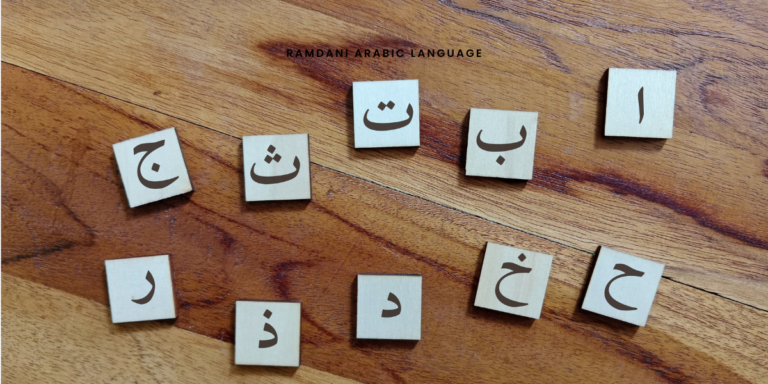
Non Arabic natives often struggle with similar looking letters. ب ت ث cause confusion. ج ح خ do the same. Daily reading solves this problem. Seeing these letters in real words fixes their forms in your memory. Context supports recognition. Confusion fades.
Reading every day also improves your ability to track lines and sentences. Arabic script can feel dense. Letters connect closely. Words appear compact. With daily practice, your eyes learn where words begin and end. Sentence flow becomes clear. Reading stops feeling crowded.
This foundation supports all other language skills. Listening improves because you recognize words you hear. Writing improves because you recall correct forms. Speaking improves because reading expands your exposure to sentence structure. Daily reading feeds every skill at once.
Vocabulary growth starts here. Even before you study meanings, you absorb word frequency. You notice which words appear often. These words become familiar. Later, when you learn their meanings, recall feels easy. Daily reading prepares the ground for vocabulary acquisition.
Arabic uses root based word formation. Words share patterns. Daily reading exposes you to these patterns naturally. You see how roots repeat across texts. You begin to sense relationships between words. This awareness develops without conscious effort.
Grammar understanding also begins through reading. Sentence structure becomes familiar through exposure. You see how verbs align with subjects. You notice word order. This familiarity makes formal grammar study easier later. Reading gives you examples. Rules then make sense.
Daily reading builds confidence. Each page read removes fear. What once felt unreadable becomes accessible. Confidence changes how you approach learning. You stop avoiding text. You start engaging with it. This shift matters.
Motivation grows through progress you can see. You measure progress by pages, not tests. You see improvement directly. This keeps you engaged. Daily reading creates a habit that sustains learning over time.
Reading Arabic every day trains patience. Progress feels slow at first. Letters repeat. Words look similar. Over time, clarity appears. This process teaches persistence. Language learning requires it.
You do not need complex material. Simple texts work. Children books. Short articles. Signs. Menus. What matters is regular contact. Daily reading builds familiarity regardless of content level.
Many learners delay reading. They wait until they feel ready. This delays progress. Reading creates readiness. Daily exposure prepares your mind for deeper learning. Avoiding text slows development.
Arabic literacy grows from contact. Not from theory. Not from memorization alone. Daily reading provides that contact. It turns abstract symbols into meaningful units.
The foundation you build through daily reading supports long term success. Without it, progress stays fragile. With it, learning becomes stable.
This is where Arabic learning starts.
Daily reading strengthens comprehension and mental processing
Practicing reading Arabic every day does more than improve letter recognition. It reshapes how your mind processes the language. For non Arabic natives, comprehension does not grow from memorizing rules alone. It grows from repeated interaction with real text. Daily reading provides that interaction.
When you read Arabic consistently, your brain begins to predict meaning. At first, you decode word by word. This process feels slow. Over time, prediction replaces decoding. You start to anticipate what comes next in a sentence. This shift marks real comprehension. It only happens through frequent reading.
Arabic sentence structure differs from many other languages. Verb placement changes. Word order varies. Daily reading exposes you to these structures in context. You stop translating mentally. You begin understanding directly. This reduces cognitive load and speeds up comprehension.
Context plays a major role in Arabic understanding. Words often carry multiple meanings. Diacritics are often omitted in standard texts. Readers rely on context to interpret meaning. Daily reading trains this skill. You learn to use surrounding words to infer meaning. This ability defines fluent readers.
Reading every day improves working memory. You hold phrases in your mind while processing the sentence. Arabic sentences can be long. Clauses connect tightly. Daily practice strengthens your ability to track meaning across lines. This makes complex texts accessible.
Non Arabic natives often struggle with unfamiliar word patterns. Arabic uses templates that shape words around roots. Daily reading exposes you to these patterns repeatedly. Over time, your brain recognizes them automatically. You begin to understand unfamiliar words through pattern recognition rather than translation.
Comprehension improves when reading becomes less effortful. Daily exposure reduces strain. Letter recognition speeds up. Word recognition becomes automatic. Mental energy shifts from decoding to understanding. This change allows deeper engagement with content.
Reading Arabic daily also improves your tolerance for ambiguity. You will not understand every word. This can cause frustration. Regular reading teaches you to move forward without stopping. You learn to grasp general meaning without full understanding. This skill is essential for real world reading.
Arabic texts reflect cultural logic. Expressions follow cultural norms. Daily reading introduces you to these patterns. You begin to understand how ideas are framed. This improves interpretation and reduces misunderstanding.
Exposure to varied texts strengthens comprehension flexibility. News articles differ from stories. Religious texts differ from dialogues. Daily reading across formats trains adaptability. You learn to adjust your reading approach based on content type.
Your reading speed increases naturally. Speed comes from familiarity, not forcing pace. Daily practice builds fluency. Faster reading allows you to cover more material. More material means more exposure. This creates a positive cycle.
Daily reading also improves attention span. Arabic script requires focus. Letters connect closely. Small marks matter. Regular reading trains sustained attention. This skill transfers to other learning activities.
Understanding improves when you encounter repeated ideas. Daily reading increases repetition. Common structures appear often. Common phrases repeat. This repetition strengthens memory and comprehension.
Reading daily supports inferencing skills. You learn to connect ideas across sentences. Arabic often implies rather than states directly. Regular exposure teaches you how meaning unfolds across a paragraph. This deepens understanding.
Non Arabic natives often rely too heavily on dictionaries. Daily reading reduces this dependence. You learn to infer meaning from structure and context. This makes reading smoother and more enjoyable.
Comprehension also improves through emotional familiarity. When text feels less foreign, anxiety drops. Calm reading leads to better understanding. Daily exposure builds this familiarity.
Reading every day connects form and meaning. Grammar stops feeling abstract. You see it working inside sentences. This makes comprehension stronger than rule based learning alone.
Your mind adapts to Arabic rhythm. Sentence flow becomes predictable. Pauses make sense. Emphasis becomes clear. These cues support understanding.
Daily reading builds resilience. Some texts feel difficult. Regular practice teaches persistence. You push through difficulty without stopping. This builds confidence and comprehension strength.
Understanding Arabic is not a sudden achievement. It grows gradually. Daily reading provides steady input. Each session adds a small gain. Over time, these gains accumulate.
Comprehension depends on exposure. The more you read, the more your brain adapts. Daily reading ensures consistent adaptation.
This practice transforms Arabic from a puzzle into a system you recognize. Understanding becomes natural rather than forced.
Daily reading makes this transformation possible.
Daily reading expands vocabulary and deepens language awareness
Reading Arabic every day plays a central role in vocabulary growth for non Arabic natives. Word lists help, but they lack depth. Real vocabulary knowledge comes from repeated encounters with words in context. Daily reading provides these encounters naturally and continuously.
Arabic vocabulary relies heavily on roots. A single root can generate many related words. Daily reading exposes you to these word families in real use. You begin to recognize relationships between words without studying charts. This recognition strengthens retention and understanding.
Seeing words in context improves memory. When you read a word inside a sentence, it connects to meaning, structure, and emotion. These connections make recall easier. Daily exposure reinforces them. Words stop feeling isolated.
High frequency words appear often in texts. Daily reading ensures you meet these words repeatedly. Repetition fixes them in memory. This process happens naturally without drilling. Over time, these words become automatic.
Arabic uses formal and informal registers. Daily reading introduces you to standard language used in media, literature, and education. This exposure builds awareness of how Arabic functions across settings. You learn which words belong to formal writing and which belong to conversation.
Contextual reading helps you understand word nuance. Many Arabic words share similar meanings but differ in usage. Daily reading shows you how writers choose words based on tone and intent. This awareness improves comprehension and expression.
Vocabulary depth grows alongside breadth. Daily reading does not only add new words. It deepens understanding of familiar ones. You see how meanings shift across contexts. This prevents shallow knowledge.
Non Arabic natives often memorize translations. This limits flexibility. Daily reading reduces reliance on direct translation. You learn words through usage. Meaning becomes intuitive rather than mapped to another language.
Collocations matter in Arabic. Certain words appear together regularly. Daily reading exposes you to these patterns. You begin to expect them. This improves both understanding and future writing.
Arabic expressions often rely on fixed phrases. Daily reading helps you recognize these expressions as units. You stop translating them word by word. You understand them as complete ideas.
Exposure to synonyms increases through reading. Arabic offers many word choices for similar ideas. Daily reading shows how writers select among them. This improves stylistic awareness and precision.
Vocabulary learning through reading supports long term retention. Words learned in context stick longer than words memorized in isolation. Daily reading reinforces this retention through repeated exposure.
Reading also introduces abstract vocabulary. News and essays use concepts not common in conversation. Daily exposure builds familiarity with these terms. This prepares you for advanced texts and discussions.
Arabic morphology becomes clearer through reading. You see prefixes and suffixes in action. You learn how tense, gender, and number appear in words. This awareness improves decoding and understanding.
Daily reading increases tolerance for unfamiliar words. You stop feeling blocked by unknown vocabulary. You learn to continue reading while inferring meaning. This keeps progress steady.
Vocabulary knowledge supports all language skills. Words you read become words you recognize in listening. They become words you use in writing and speaking. Daily reading feeds this cycle.
Non Arabic natives often underestimate how many exposures a word needs. Research suggests multiple encounters are required for retention. Daily reading provides these encounters naturally.
Reading Arabic daily also builds confidence in dealing with complex terms. Academic and formal vocabulary stops feeling distant. Familiarity replaces fear.
You begin to sense which words feel natural in Arabic. This sense cannot be taught directly. It develops through exposure. Daily reading builds it slowly.
Vocabulary growth through reading feels organic. You do not chase words. They come to you through text. This reduces burnout.
Arabic texts reflect cultural concepts. Vocabulary carries cultural meaning. Daily reading introduces you to these concepts through language. This deepens understanding beyond definitions.
Daily reading turns vocabulary learning into a continuous process. Each session adds small gains. Over time, your word knowledge expands significantly.
This expansion supports fluency. Fluency depends on access to words. Daily reading ensures that access grows steadily.
Vocabulary mastery does not come from effort alone. It comes from exposure. Daily reading provides that exposure.
This is how vocabulary becomes part of your thinking.
Daily reading supports fluency confidence and long term mastery
Practicing reading Arabic every day leads to fluency over time. Fluency does not mean knowing every word. It means moving through text with control and understanding. Daily reading builds this control gradually and consistently for non Arabic natives.
Fluency begins with ease. When you read often, effort decreases. Your eyes move smoothly across lines. Your mind follows meaning without strain. This ease allows you to focus on ideas rather than form.
Confidence grows through repeated success. Each completed text proves capability. Daily reading provides regular proof. This builds belief in your ability to handle Arabic. Confidence changes how you approach challenges.
Fear blocks learning. Arabic script often creates fear for beginners. Daily exposure removes this fear. What you see often stops feeling intimidating. Familiarity replaces hesitation.
Reading fluency affects listening and speaking. When you recognize structures on the page, you recognize them in speech. This improves comprehension during conversations and lectures. Daily reading supports this transfer.
Long term mastery depends on habit. Intensive study fades without routine. Daily reading creates a sustainable habit. Even short sessions maintain progress. This consistency protects against loss.
Arabic changes across regions and fields. Daily reading across topics builds adaptability. You learn to handle different styles and registers. This prepares you for real world use.
Fluency improves reading speed. Speed allows more exposure. More exposure accelerates learning. Daily reading fuels this cycle naturally.
Comprehension deepens with fluency. When reading becomes smooth, you notice nuance. You sense tone. You understand implication. These skills define advanced ability.
Daily reading also sharpens critical thinking. You analyze arguments. You compare ideas. Arabic texts challenge interpretation. Regular exposure strengthens these skills.
Writing improves through reading. You absorb sentence rhythm. You learn how ideas connect. Daily reading supplies models that shape your own expression.
Confidence in writing grows when reading feels familiar. You trust your sense of what looks right. This trust comes from exposure, not rules.
Daily reading builds endurance. Longer texts become manageable. Academic and professional materials stop feeling overwhelming.
Non Arabic natives often stop reading when progress feels slow. Daily practice prevents this. Small daily effort beats occasional intensity. Progress stays steady.
Language mastery requires patience. Arabic rewards persistence. Daily reading teaches this patience. You accept gradual improvement.
Reading also supports lifelong learning. Once fluent, you continue growing through text. Daily reading keeps Arabic active in your life.
Fluency allows enjoyment. You begin reading for interest, not practice. This enjoyment sustains engagement.
Daily reading connects you to Arabic culture. Texts carry values and perspectives. Understanding language opens access to these ideas.
Confidence grows when you stop avoiding text. Daily reading removes avoidance. Engagement replaces distance.
Mastery does not arrive suddenly. It builds quietly. Daily reading supports this quiet growth.
Arabic becomes part of your routine. Routine creates stability. Stability supports mastery.
Daily reading transforms Arabic from a subject into a tool.
This transformation defines success.