Many students ask me this question. Should I learn Modern Standard Arabic (MSA), or should I start with a dialect? I have taught Arabic to non-native speakers for more than seven years. Most of my students are from the diaspora. They want to read and write correctly. They want to understand Arab culture, religion, and heritage. But they also want to speak with people and understand daily conversations.
So what is the right choice to learn arabic?
Start with MSA Here’s why. MSA is the foundation of the Arabic language All Arabic books, news, religious texts, and formal content use MSA MSA grammar helps you understand all dialects better If you learn MSA first, you can move to any dialect later with less confusion Arabic dialects are different from one country to another. Egyptian Arabic is not the same as Moroccan or Levantine Arabic. If you start with a dialect, your Arabic will be limited to that region. Many students who begin with dialects get stuck. They can speak a little, but they can’t read or write. They struggle with formal Arabic, and their progress stops. My Teaching Approach I focus on reading and writing first. I help my students: Build strong grammar skills Read stories and short texts in Arabic Write simple sentences and paragraphs Understand how words are built and used Later, when they are ready, we can explore dialects. By that time, they already have a strong base.
Final Thought about your arabic
Ask yourself: Why do you want to learn Arabic? If your goal is travel or speaking with friends, a dialect may help. But if your goal is education, religion, or professional growth, start with MSA. You will thank yourself later.
Many students feel confused when they first hear that Arabic has two forms—MSA and dialects. This is not common in most other languages. You don’t usually study a “standard” and a “street” version separately. But Arabic is different. MSA is the formal, written language used in books, newspapers, education, and media. Dialects are spoken versions that people use in daily life, and they change from country to country.
If you only want to speak with people in one country, learning a dialect may seem easier at first. You can memorize phrases, understand conversations, and feel progress quickly. But this progress is often limited. Most dialects don’t follow clear grammar rules. They have no standardized spelling. You won’t find many books or structured courses. If you move to another region, you will face problems because dialects are not the same. For example, Moroccan Arabic and Syrian Arabic are very different. A student who learns only one dialect may feel like a beginner again when hearing another. On the other hand, MSA connects all Arabic speakers. It is not always used in casual conversations, but everyone understands it. If you watch the news in any Arab country, it’s in MSA. If you read a book, it’s in MSA. If you listen to a speech, it’s in MSA. When you build your Arabic knowledge using MSA, you are investing in skills that last. You learn vocabulary, grammar, sentence structure, and reading skills that help you later, even when switching to a dialect. This is why I guide my students to focus on MSA first. I’ve seen the results. The ones who learn MSA first become more confident, independent, and flexible in their Arabic journey. Dialects can come later, and when they do, they come easier and faster.
Some learners ask, “But people don’t speak MSA in daily life, so why should I learn it first?” This is a good question. It’s true—most Arabs don’t use MSA in the street, at home, or with friends. They use their local dialects. But this doesn’t mean MSA is not useful.
Think about how people learn English. No one speaks like a grammar book in everyday life, but we still study grammar. We still learn how to read and write correctly. The same rule applies to Arabic. MSA gives you the structure. It helps you understand how the language works. It teaches you roots, patterns, verb forms, and correct usage. Without this, your Arabic stays weak, no matter how many dialect phrases you memorize. If your goal is to speak with locals in markets, taxis, or cafés, then learning some dialect phrases is fine. But this is not fluency. Fluency means you understand the language in different situations. You can read signs, understand public speeches, read articles, and express yourself in writing. Only MSA gives you that power. I always tell my students to see MSA as the “engine” of the language. It drives everything. Dialects are like the “decoration.” You can add them later. But if you start with the decoration and forget the engine, you won’t go far. You don’t need to choose one and ignore the other. But you need to start with the one that gives you long-term value. I have seen students who focused only on dialects for years and still cannot read a short Arabic text. They feel frustrated and stuck. The students who start with MSA, even slowly, always make better progress over time. Do you want to build something strong or something temporary? The answer to that question should guide your decision.
Learning Arabic is not just about speaking. It’s also about connecting with the culture, understanding history, and accessing knowledge. Many students come to Arabic because they want to understand the Quran, classical texts, or Islamic studies. Others want to study Arab history, politics, or literature. All of these areas require MSA. Dialects won’t help you in these fields. You won’t find religious texts or academic books written in Moroccan, Egyptian, or Levantine Arabic. These are spoken forms. They are not used in serious writing or study.
This is why I ask every new student the same question: What is your goal?
If your goal is to visit one Arab country for a short time, you can survive with a few dialect phrases. But if your goal is to study Arabic, build a career, understand the religion, or teach others, MSA is the only path. It gives you access to everything. Another important point is that dialects are full of French, English, and local words. Some dialects, like Moroccan Arabic, can sound like a completely different language. Even native speakers from the Middle East often struggle to understand it. But MSA is neutral. It doesn’t belong to one country. It’s respected across the Arab world. When you speak or write in MSA, you are taken seriously. You show that you respect the language and the culture. This also helps your confidence. Many students who start with MSA tell me that they feel more motivated. They feel they are learning something real. They see progress. They can read simple news or understand part of a khutbah. These small wins keep them moving. Don’t let social media or trends confuse you. Dialects are important, but they come after. Build your house on a strong base. That base is MSA.
After years of teaching Arabic to non-Arabic speakers, I saw the same problems again and again. Many learners waste time jumping between dialect videos and random content. They get confused. They don’t know where to start or what to focus on. So I built a clear path.
At Ramdani Arabic Academy, I guide students step by step. We start with Modern Standard Arabic. We build reading and writing skills first. I use simple texts, clear explanations, and real examples. I also include cultural notes and practical exercises. My goal is not just to teach Arabic, but to help each student understand the language deeply.
Later, I introduce dialects—but only when the student is ready. That’s the difference. My program respects your time. It respects your goals. I don’t just give you words to memorize. I give you tools to think in Arabic, write in Arabic, and grow in Arabic.
Whether you want to study Islamic texts, communicate with your family, prepare for school, or just understand the language of the Quran—this path works.
Arabic for non-Arabic speakers doesn’t have to be confusing. It just needs the right structure. That’s what I offer at Ramdani Arabic Academy. You don’t need to figure it out alone. I’ve already tested these methods with real students from around the world. I’ve seen the results. The progress is real.
If you’re serious about learning Arabic, don’t guess. Don’t jump between dialects and trends. Start right.
If you’re just starting your Arabic journey, I’ve created beginner-friendly courses designed for non-Arabic speakers.
You’ll learn step by step—starting with the alphabet, basic reading, writing, and simple grammar. Clear lessons. Practical exercises. No confusion. Here are my beginner courses at Ramdani Arabic Academy to help you build a strong foundation in Arabic.
Colors are one of the first things people learn when they study a new language.They help us describe the world around us and share our ideas more clearly.In Arabic, colors have special names and sounds that might be different from what you know, but they …
When you travel or live in an Arabic-speaking country, your experience depends on how well you can connect with people. Language is the bridge. Even if you don’t master Arabic, knowing a few important words can make a big difference. It helps you ask for …
When you visit an Arabic-speaking country, the first thing you notice is how much of the environment speaks to you through signs. Street names, shop boards, metro maps, hospital directions, road warnings, menus, advertisements — everything is written for people to read and act on. …
Arabic is one of the five most widely spoken languages in the world. Over 400 million people speak it across more than 20 nations. Furthermore, it is one of the six official languages of the United Nations. As a result, not speaking Arabic means missing …
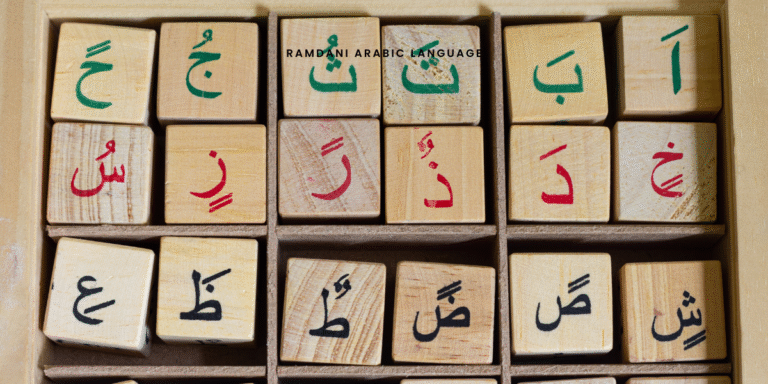
Arabic is one of the world’s oldest and richest languages. It is spoken by hundreds of millions across the Middle East, North Africa, and increasingly by learners worldwide. Its script, grammar, and vocabulary carry centuries of history, culture, and thought. For anyone learning Arabic, mastering …
Pharmacies shape daily life for every learner who lives or travels in an Arabic speaking environment. You visit a pharmacy when you feel discomfort. You visit it when you need advice from trained staff. You visit it when you must understand instructions on labels and …