3 Timeless Lessons Arabic Calligraphy Brings to Contemporary Artists
Arabic calligraphy stands as one of the most distinctive art forms in the world. It is more than decoration. It is the visual expression of language, culture, and faith. For centuries, Arabic calligraphy has shaped the artistic identity of Islamic civilization and influenced countless other cultures. Today, it continues to evolve, finding a place in modern design, digital media, architecture, and fine art.
Calligraphy in Arabic culture was never only about writing words. It was a discipline that required patience, precision, and a deep understanding of beauty and balance. Every curve, dot, and line carried meaning. The early calligraphers saw their work as an act of devotion. They aimed not just to convey information, but to express harmony and divine order through form.
Over time, Arabic calligraphy became more than a religious or literary tool. It turned into a foundation for artistic creation. Artists and scholars used it to preserve knowledge and reflect the intellectual spirit of their time. The art spread from manuscripts to walls, from mosques to palaces, from paper to ceramics, and later, into textiles, coins, and modern installations. Its reach was wide because it combined language and art in a way that could speak across generations.
When we look at the roots of Arabic calligraphy, we see how it developed through styles like Kufic, Naskh, Thuluth, Diwani, and Ruqʿah. Each script reflected a different historical and cultural moment. Kufic was the first formal style, known for its strong geometric structure. It dominated early Qur’anic manuscripts and architecture. Later, cursive scripts like Naskh and Thuluth brought more fluidity, making writing faster and more elegant. These developments show how calligraphy adapted to the needs of society while maintaining its spiritual and aesthetic values.
In the modern world, Arabic calligraphy has entered a new phase. It is no longer limited to traditional uses. Many contemporary artists blend classical scripts with modern techniques. Some use digital tools to redesign old forms. Others mix Arabic letters with abstract art, street art, or modern typography. The result is a vibrant movement that connects tradition with innovation.
Modern art has opened new doors for Arabic calligraphy. Artists from different backgrounds use it to explore identity, language, and culture in a globalized world. For example, Lebanese artist Samir Sayegh, Iraqi calligrapher Hassan Massoudy, and Tunisian-French artist eL Seed each approach calligraphy in unique ways. Massoudy merges traditional calligraphy with expressive color and motion. eL Seed uses large-scale murals to deliver messages of peace and unity, often blending Arabic script with street art aesthetics. Their work proves that Arabic calligraphy can exist both in galleries and on city walls, speaking to new audiences while keeping its deep roots intact.
This shift toward modern interpretation does not erase tradition. Instead, it renews it. The beauty of Arabic calligraphy lies in its flexibility. The shapes of its letters invite creativity. The rhythm of its structure allows for both order and emotion. In this way, calligraphy becomes a bridge between the past and the present, between the spiritual and the material, between words and art.
Technology has also played a major role in this transformation. Digital design tools, social media, and online education have given Arabic calligraphy a global stage. Today, learners and artists from non-Arabic backgrounds study this art form with enthusiasm. They see in it a universal language of beauty and balance. Digital typography now includes Arabic fonts that merge traditional aesthetics with modern usability. This blend of craft and technology ensures that the art continues to evolve, not fade.
Arabic calligraphy today represents more than culture. It stands as a statement of identity in a fast-changing world. Many young artists use it to reconnect with their heritage or to challenge stereotypes. It becomes a tool for dialogue. It invites reflection on what it means to belong, to express, to preserve, and to innovate. Through the lines of a single word, an artist can express the complexity of history and the simplicity of human emotion.
The modern role of Arabic calligraphy is not only visual. It carries ideas. It speaks of continuity. It asks questions about the relationship between art, language, and meaning. It shows that tradition can adapt without losing its essence. This is why calligraphy remains relevant in contemporary art scenes from Cairo to London, from Doha to New York.
The story of Arabic calligraphy is a story of resilience and renewal. It has passed through centuries of change, yet its spirit remains alive. It continues to inspire artists, designers, and thinkers who see in it not only a form of writing, but a form of seeing. A way to connect with something larger than words. A reminder that art, at its best, is both timeless and evolving.
The Historical Development and Transition into Modern Art
To understand the role of Arabic calligraphy in modern art, you need to look at how it developed through history. Arabic calligraphy was never created as decoration. It grew out of a need to preserve the Qur’an and to express the written word with respect and precision. Over time, it became an art form that represented the culture, intellect, and spirituality of the Arab and Islamic world.
The earliest form of Arabic writing appeared in the 4th century. But it was after the rise of Islam in the 7th century that calligraphy began to flourish. The Qur’an, written in Arabic, was considered the word of God. Because of this, writing took on a sacred meaning. Calligraphers became respected figures who devoted their lives to perfecting the form of each letter. Their work demanded accuracy, balance, and discipline.
The Kufic script was the first major style. It was bold and geometric, used in early Qur’anic manuscripts and on architectural monuments. Its straight lines and sharp angles gave it strength and dignity. Kufic script became a visual symbol of the Islamic world’s unity and order. Later, more rounded and cursive scripts such as Naskh, Thuluth, Muhaqqaq, and Diwani appeared. These scripts brought movement and elegance. They allowed the calligrapher to write faster and to explore rhythm and proportion in new ways.
As Islam spread to Persia, North Africa, and Andalusia, local traditions began to shape calligraphy. Persian artists developed Nastaʿliq, a flowing and poetic script that captured beauty and emotion. In Ottoman Turkey, Diwani and Tughra styles became symbols of royal authority and artistic refinement. Each region gave Arabic calligraphy a new form and purpose, turning it into a universal art that transcended language and geography.
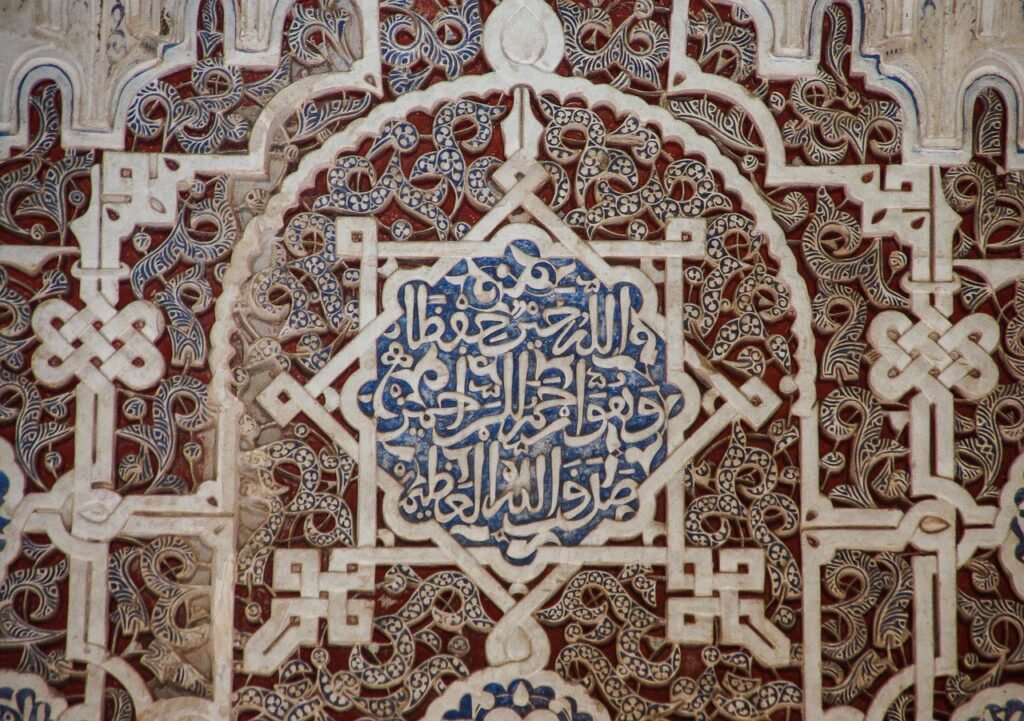
During the medieval period, calligraphy appeared in architecture, textiles, ceramics, and metalwork. Mosques, palaces, and manuscripts carried inscriptions that combined meaning with form. Every word had a visual presence. Calligraphy turned spaces into expressions of faith and intellect. The walls of the Alhambra in Spain, the Dome of the Rock in Jerusalem, and the mosques of Istanbul all carry inscriptions that show how deeply Arabic calligraphy shaped the visual identity of Islamic civilization.
When printing technology arrived in the Arab world during the 19th century, the role of calligraphy began to change. Printing required uniform typefaces, and the personal touch of the calligrapher started to fade. Yet this challenge became the seed for transformation. Artists and scholars began to rethink how Arabic script could exist in a modern world. The 20th century brought revolutions, modernization, and exposure to Western art movements. Arabic calligraphy entered a new stage.
In the mid-20th century, a movement known as Hurufiyya (from “huruf,” meaning “letters”) emerged across the Arab world. This movement combined the traditional beauty of Arabic script with the concepts of modern art. Hurufiyya artists saw the Arabic letter not only as a tool for writing but as a visual form that could express emotion, identity, and philosophy. They used calligraphy as a bridge between heritage and modern expression.
Artists such as Shakir Hassan Al Said in Iraq, Madiha Omar in Syria, and Nja Mahdaoui in Tunisia led this transformation. They explored abstraction and symbolism using the Arabic letter as the central element. Some works had no readable words at all, only abstract forms inspired by the flow of script. Others combined traditional verses with bold, modern color and texture. These artists gave Arabic calligraphy a new language, one that spoke both to its past and to its present.
As art movements spread across the Middle East, Arabic calligraphy entered galleries and museums. It was no longer only for religious or decorative use. It became a personal expression of identity, a way to explore cultural memory, and sometimes a form of resistance. During political unrest or social change, artists used calligraphy to express unity, protest, or hope. The letter became a symbol of continuity in times of transformation.
Today, Arabic calligraphy continues to adapt. Many artists mix it with photography, sculpture, and digital design. Street artists like eL Seed use large calligraphic murals to bring messages of connection to public spaces. Graphic designers integrate Arabic letters into logos, posters, and digital media. This new environment has given Arabic calligraphy a global presence. It speaks not only to Arabic speakers but to anyone who appreciates balance, movement, and form.
The transition of Arabic calligraphy into modern art shows one thing clearly: this tradition never stopped evolving. It adjusted to each age without losing its core. What began as sacred writing has become a living art form that continues to inspire new generations. It reflects how culture survives by transforming, not by standing still.
Arabic calligraphy’s journey from sacred text to contemporary art mirrors the journey of Arabic culture itself—rich, layered, and always in motion. It reminds us that art grounded in tradition can remain relevant when it continues to grow and speak to the present.
Arabic Calligraphy in Contemporary Artistic Practice and Global Influence
Arabic calligraphy has become an active part of global art. It no longer belongs only to the traditional context of manuscripts or mosques. It now appears in modern galleries, digital design, fashion, and public murals. The Arabic letter has transformed into a visual element that speaks beyond language, culture, and religion.
In the last few decades, artists have used Arabic calligraphy to explore identity and cultural dialogue. They see it not only as a historical art but as a living form that can express modern ideas. Many artists working in the Arab world and abroad use calligraphy to connect heritage with global art trends. This has created a powerful exchange between the traditional and the contemporary.
One of the most recognized figures in this movement is Hassan Massoudy from Iraq. He combines classical calligraphy with modern color and composition. His works often feature single words or phrases written in large, sweeping strokes. Behind each letter, he blends colors that suggest emotion or energy. His calligraphy is both structured and free. It reflects the discipline of traditional script and the expression of modern painting.
Another major figure is eL Seed, a French-Tunisian artist known for his large-scale public works. He paints Arabic calligraphy on buildings and walls across the world. His art, which he calls “calligraffiti,” combines classical Arabic forms with the raw style of street art. His murals carry messages of unity, peace, and cultural pride. His famous project on the buildings of Cairo’s Manshiyat Nasr district turned an entire neighborhood into one massive piece of calligraphy visible only from above. His goal is not only aesthetic but social—to bring people together through shared beauty and meaning.
Artists like Lalla Essaydi from Morocco and Rachid Koraïchi from Algeria bring different interpretations. Essaydi uses Arabic script in photography and mixed media to question gender and identity. She often writes calligraphic texts on the bodies and clothing of women, reclaiming the space of language and representation. Koraïchi combines Arabic letters with symbols and textiles, creating installations that connect art with spirituality and human memory.
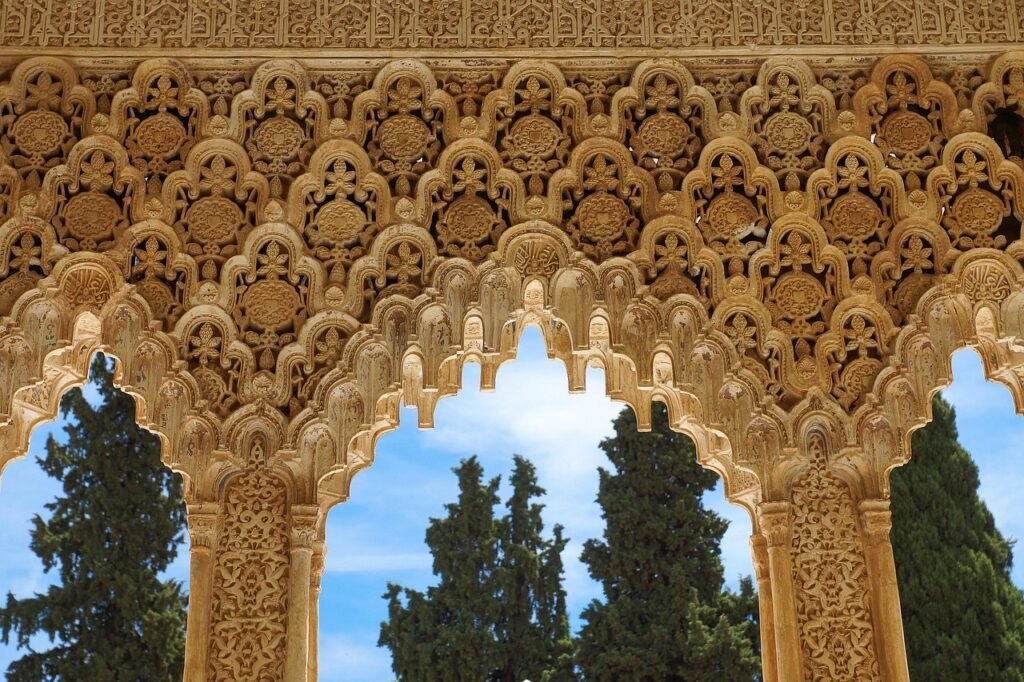
In the Gulf region, calligraphy has also become central to contemporary art initiatives. Cities like Doha, Dubai, and Riyadh now host art fairs and exhibitions where Arabic calligraphy appears in digital installations, sculptures, and conceptual pieces. Modern architects use calligraphic designs on buildings, blending text with structure. The Museum of Islamic Art in Doha, for example, integrates calligraphic forms in its architecture and exhibits, showing how the art continues to influence modern design thinking.
Outside the Arab world, many artists and designers study Arabic calligraphy as a form of universal beauty. Digital designers in Europe, Asia, and the United States experiment with Arabic typography. They create modern Arabic fonts that preserve the script’s flow while adapting it for print and screen use. This has expanded the reach of the Arabic letter in technology, media, and global communication.
Arabic calligraphy has also entered fashion and branding. Designers use script in clothing patterns, jewelry, and logos. International brands collaborate with Arab calligraphers to create culturally grounded designs. This trend has given Arabic calligraphy new commercial visibility. What once appeared only on paper or stone now appears on fabric, glass, and digital screens.
Education plays a strong role in this expansion. Online platforms and academies teach Arabic calligraphy to learners worldwide. The internet has made it possible for non-native speakers to study the structure, rhythm, and meaning of Arabic letters. Students from Asia, Europe, and the Americas now explore this art form with curiosity and respect. This global learning community keeps the tradition alive and pushes it forward at the same time.
The rise of Arabic calligraphy in modern art also reflects a deeper shift. In a globalized world, many artists use it to explore questions of identity, belonging, and cultural preservation. The Arabic letter becomes a tool to express individuality while staying rooted in tradition. It allows artists to tell their stories in a visual language that connects past and present.
You can see this clearly in exhibitions and biennales where Arabic calligraphy is presented next to contemporary installations and abstract works. The contrast between old and new shows how flexible the art is. Calligraphy adapts to new materials, from canvas to LED screens, from ink to light projections. It continues to evolve without losing its visual strength.
The global influence of Arabic calligraphy also challenges narrow perceptions of Arab culture. It presents Arabic heritage not as something closed or ancient, but as dynamic and creative. Through art, it opens dialogue between East and West, tradition and technology. It reminds the world that the Arabic language carries not only words but shapes that express rhythm, emotion, and thought.
Arabic calligraphy has become a cultural ambassador. Its beauty speaks across languages. Its presence in modern art proves that tradition and innovation are not opposites. They feed each other. The modern artist builds on the calligrapher’s discipline, just as the calligrapher’s art gains new life through modern tools.
Every new generation of artists continues to redefine what Arabic calligraphy can be. They test its limits, yet always return to its essence—the letter, the line, and the balance. Through them, Arabic calligraphy remains one of the most powerful artistic languages in the world.
Advice
Arabic calligraphy carries history, meaning, and identity. It connects generations through the written word and turns language into art. Today, as modern artists and learners explore this form, they are not only learning a skill but entering a long tradition that has shaped minds and cultures for centuries.
Modern life often moves fast, but Arabic calligraphy teaches the opposite. It asks you to slow down, to focus, to respect detail. Every stroke demands intention. Every letter requires patience. This process shapes more than your handwriting. It shapes how you think and see. It trains you to appreciate structure, proportion, and discipline. These are qualities that improve all forms of learning and creativity.
For anyone who wants to study Arabic or understand Arab culture deeply, calligraphy is a gateway. You do not need to be an artist to benefit from it. Writing letters in Arabic helps you understand the rhythm of the language. It builds connection between form and meaning. It makes you see that Arabic is not only spoken—it is seen.
Arabic calligraphy also helps you build cultural awareness. You begin to see how art and language can preserve identity even in times of change. When you learn calligraphy, you learn history. You learn how ideas, faith, and expression merged to form one of the most refined art traditions in the world. This understanding builds respect. It builds dialogue. It reminds you that every culture holds treasures that deserve to be studied and shared.
At Ramdani Arabic Academy, we believe learning Arabic should go beyond vocabulary and grammar. Our goal is to help students experience the full richness of the language. That means understanding its art, its rhythm, and its cultural depth. Through our lessons and courses, we introduce learners to both the structure of Arabic and the beauty of its expression.
Our programs include materials about calligraphy, Arabic typography, and the history of Arabic scripts. We want students to see the letter as more than a tool of communication. We want them to see it as a living form that tells a story about who we are and where we come from. Whether you are a beginner or an advanced learner, studying calligraphy gives you a deeper relationship with the language.
We also share articles and resources that explore how Arabic calligraphy fits into modern life—how it appears in design, education, and art today. Our goal is to make Arabic learning practical and cultural at the same time. We want every learner to find meaning in each letter, not only pronunciation or translation.
As the founder, I believe that Arabic calligraphy is not just an art to admire. It is a practice that shapes character. When I first started studying it, I noticed how it changed my focus and patience. It helped me understand that mastery comes from repetition and care. It also reminded me that creativity is strongest when built on discipline. This is the lesson I try to share with every student.
If you are studying Arabic today, give time to calligraphy. You do not need to become a calligrapher. You only need to see the value of the process. Practice simple letters. Trace their forms. Feel the flow of the pen. You will find calm and concentration in every line. You will also start to understand why this art has lasted for over a thousand years.
For artists, Arabic calligraphy offers endless possibilities. It gives you a visual language that can express emotion and structure at the same time. For designers, it offers a unique form that can combine tradition and innovation. For learners, it offers a deeper connection to Arabic thought and history.
Arabic calligraphy in modern art is not a revival—it is a continuation. It proves that cultural heritage can stay alive when people keep learning and sharing it. Each new work, each new student, keeps the tradition moving forward.
If you are reading this, think about what role Arabic calligraphy can play in your own learning or creative path. How can you use it to express your ideas or connect with others? What can you learn from its balance, its order, and its patience?
At Ramdani Arabic Academy, we invite you to explore these questions with us. Our mission is to make Arabic learning meaningful and complete. We believe the beauty of the language lies not only in speaking it but also in seeing it. Calligraphy is one of the strongest ways to reach that understanding.
Arabic calligraphy teaches respect for words. It reminds you that meaning begins with form. In a world full of noise and speed, it offers silence and focus. When you practice it, you do more than learn an art—you continue a story that belongs to all who value knowledge, beauty, and culture.
This is what our academy stands for. This is what I, Ramdani Mohamed, hope to share with every learner who joins us.
Arabic calligraphy will continue to grow, just as the Arabic language continues to live. Its role in modern art proves that true art never dies—it transforms. When you learn it, you become part of that transformation.