Which Arabic Dialect Is Closest to the Quran?
Arabic has a deep and complex history that reflects the story of a civilization. The Arabic language today exists in many forms. Learners who begin studying Arabic often face one central question: which dialect is closest to the language of the Quran? The answer requires more than a simple name of a dialect. It calls for understanding how Arabic developed, how it spread, and how regional forms evolved over time.
When people speak of Arabic, they often imagine a single, unified language spoken across the Arab world. In reality, Arabic is a family of related varieties. The Quran was revealed in the 7th century in what scholars call Classical Arabic, the form of the language used by the tribes of the Arabian Peninsula, especially in and around Mecca and Medina. This form became the foundation of Quranic Arabic, the language of divine revelation and the model for later Arabic grammar, poetry, and literature.
After the rise of Islam, Arabic spread beyond the Arabian Peninsula. As the Muslim community expanded into regions like Iraq, Egypt, North Africa, and the Levant, the Arabic language encountered new peoples, new accents, and new linguistic influences. Local forms of Arabic began to develop naturally through everyday speech. Over centuries, these became what we now call dialects—spoken versions of Arabic that vary from country to country, and sometimes even from city to city.
To understand which dialect is closest to the Quran, you must first understand how different modern dialects relate to their Classical roots. Some dialects preserved many ancient features because their speakers remained close to the early centers of Islam. Others changed more over time due to contact with other languages, invasions, and cultural shifts.
The Bedouin dialects, spoken by tribes across the Arabian deserts, are often seen as the most conservative forms of Arabic. Linguists describe them as “conservative” because they keep features of grammar, pronunciation, and vocabulary that existed in pre-Islamic and early Islamic times. For example, Bedouin tribes in the Najd region of Saudi Arabia, as well as those in parts of Yemen and Oman, still use certain sounds and grammatical endings that you can find in Quranic Arabic. Their speech patterns are close to what Arab grammarians recorded more than a thousand years ago.
In contrast, dialects spoken in major urban centers—such as Cairo, Damascus, or Beirut—have evolved more quickly. These regions became melting pots of cultures, and Arabic there absorbed new elements. Words from Turkish, Persian, French, or English entered daily use. Some grammatical forms were simplified. The rhythm and pronunciation of speech changed. For learners, these dialects are easier to hear and imitate, but they are further from the original structure of Quranic Arabic.
Another important point is that the language of the Quran is not a dialect in the modern sense. It is a standardized and preserved form of Arabic that reflects the most eloquent and refined style known to the Arabs of that time. It was considered the linguistic peak of Arabic expression. This is why Muslims regard it as miraculous, and why scholars dedicated their lives to studying it. The Quran’s Arabic became the reference point for grammar, lexicon, and pronunciation.
Over time, scholars developed what we now call Modern Standard Arabic (MSA). It is based on Classical Arabic but adapted for modern communication. It is used in media, education, and formal writing across the Arab world. MSA is not anyone’s native spoken language, but it serves as a bridge among Arabic speakers. When learners study Arabic for the Quran or for academic purposes, they are usually learning a form of MSA that still follows the rules of Classical Arabic.
From a historical and linguistic view, the dialects of the Arabian Peninsula—especially those spoken in the Najd and Hijaz regions—remain the closest to the Arabic of the Quran. The reason is simple: geographic continuity and limited foreign influence. While even these dialects have changed, their structure, pronunciation, and vocabulary still show strong links to Classical Arabic.
For example, in some Saudi dialects, speakers still pronounce the letter “qaf” as “q,” similar to Quranic Arabic, while many other regions changed it to “g” or “ʔ.” Certain grammatical forms, like the dual number or specific verb endings, still appear in Bedouin speech, though they disappeared in most other dialects. These features give us a linguistic window into how the earliest Arabs might have spoken when the Quran was first recited.
Understanding these connections helps learners appreciate that studying Arabic is not just about mastering a modern dialect. It is about connecting with a living history that stretches across centuries. The Arabic of the Quran represents a point of origin from which all dialects diverged. Each dialect tells the story of how Arabic adapted to local cultures while keeping the soul of its original form.
For anyone learning Arabic today, recognizing this background gives deeper meaning to the language. Whether your goal is to read the Quran, communicate across the Arab world, or explore Arabic literature, knowing where the language comes from allows you to see its unity behind the differences.
The Historical Evolution of Arabic Dialects and Their Relation to Quranic Arabic
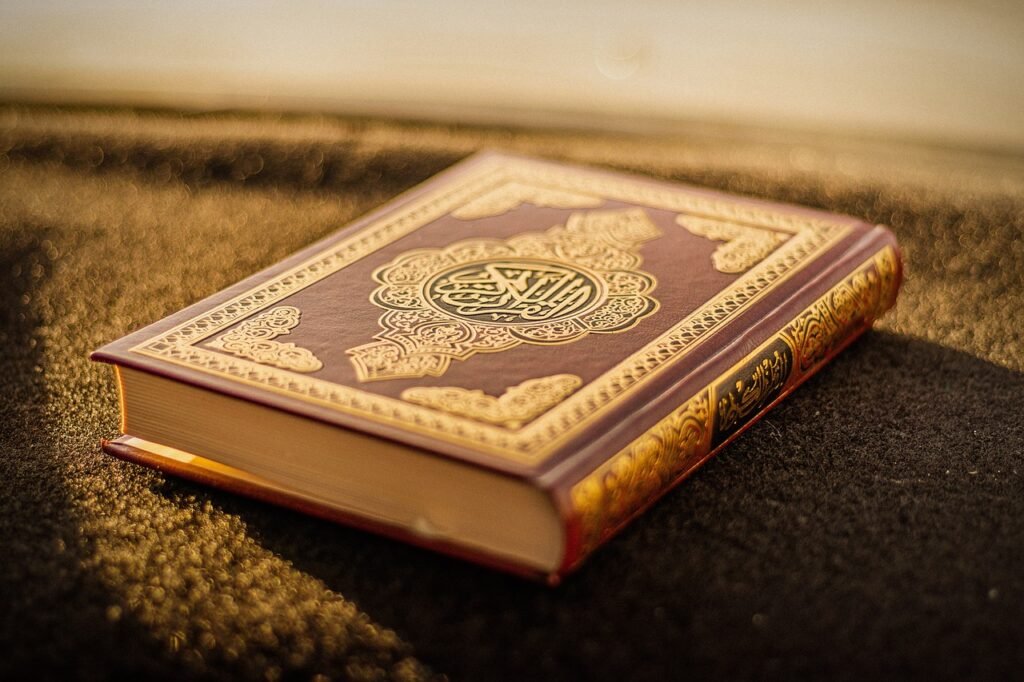
The Arabic language did not appear suddenly in its Quranic form. It developed gradually over centuries. Before the Quran, there were many dialects among the Arab tribes of the Arabian Peninsula. These dialects shared common roots but differed in pronunciation, vocabulary, and grammar. When the Quran was revealed, it used the dialect of Quraysh, the tribe of the Prophet Muhammad, because it was widely understood and admired for its clarity and beauty.
Linguists classify the Arabic language into three main historical stages. The first is Old Arabic, used by tribes before Islam. The second is Classical Arabic, which reached its highest form in the Quran and early Islamic literature. The third is Modern Arabic, which includes Modern Standard Arabic and all the spoken dialects that exist today.
During the pre-Islamic period, the Arabian Peninsula had limited contact with other languages. Trade and poetry helped unify Arabic to some extent, but each tribe still had its own speech. The Quran appeared at a time when Arabic was already rich in structure and expression. It unified many of the linguistic variations by becoming a model of eloquence. After the spread of Islam, this unifying influence grew stronger.
When the early Muslims conquered vast territories, Arabic became the language of administration, religion, and learning. In places like Iraq, Syria, Egypt, and North Africa, local populations adopted Arabic as they converted to Islam. However, they brought their own linguistic habits into it. Over time, spoken Arabic changed in each region while the written, formal Arabic remained stable.
This division created two levels of the language. The first level is the formal language, used in writing, the Quran, and public speech. The second is the colloquial dialect, used in daily communication. This situation still exists today.
The dialects developed in response to several historical factors.
1. Geographic separation
As Arabic spread across different regions, each area developed its own variant. The dialects of the Arabian Peninsula stayed closer to Classical Arabic because of their physical and cultural isolation. Meanwhile, dialects in the Levant and North Africa absorbed foreign elements due to their proximity to other civilizations.
2. Foreign influence
The Arabic spoken in Egypt, the Levant, and North Africa incorporated many non-Arabic words from languages like Coptic, Greek, Persian, Turkish, and later French and English. This influence affected pronunciation and vocabulary, but not the deep grammatical structure inherited from Classical Arabic.
3. Urbanization and social change
Cities became centers of mixed populations. As a result, speech in cities tended to simplify. Complex grammar gave way to easier forms. Verb endings were dropped. The dual form disappeared in many regions. Over time, these changes created a noticeable gap between the written Arabic of scholars and the spoken Arabic of daily life.
4. Preservation through religion and education
Despite the spread of dialects, the Quran and Islamic scholarship preserved Classical Arabic. Generations of scholars memorized and taught the Quran using the same grammatical system. This continuous tradition kept the core structure of the language alive. When you read or hear the Quran today, you are engaging with the same linguistic form that scholars studied a thousand years ago.
From this history, you can see that all dialects of Arabic are descendants of Classical Arabic. None of them are completely separate languages. The differences we see today reflect natural linguistic evolution shaped by geography, politics, and contact with other cultures.
Among modern dialects, those of the Arabian Peninsula, especially the Najdi and Hijazi dialects, kept many original features. For example, the use of case endings in some contexts, the pronunciation of certain consonants, and the vocabulary used in desert life all resemble the Classical forms. Dialects in North Africa and the Levant moved further away because of long-term exposure to other languages and historical events such as colonization.
Modern Standard Arabic (MSA) serves as a bridge between all these forms. It is based on Classical Arabic but adapted for modern communication. MSA allows educated speakers from different regions to understand each other. For learners, it represents the most practical entry point into the Arabic world while maintaining a link to the Quranic language.
The historical development of Arabic shows a balance between change and continuity. Spoken Arabic evolved to fit daily life, but the sacred and literary tradition of the Quran anchored the language. This dual nature explains why Arabic remains both diverse and unified. You can travel from Morocco to Oman and hear different dialects, yet all speakers recognize the sound and rhythm of Quranic Arabic as part of their linguistic identity.
Arabic learners who understand this history can approach the language with a clearer goal. If your main interest is the Quran, you will focus on Classical Arabic and its grammar. If your goal is communication, you can choose a dialect while keeping your foundation in MSA. The key is knowing how these layers connect. Every word you learn carries traces of history that lead back to the Quranic source.
Which Modern Dialect Is Linguistically Closest to Quranic Arabic
The search for the dialect closest to the Quranic language is not only about geography. It involves grammar, pronunciation, vocabulary, and linguistic continuity. Modern Arabic dialects vary widely, but some preserve more of the original structure than others.
When linguists study dialects, they look for specific features that reflect Classical Arabic. These include verb patterns, noun endings, sounds, and the way sentences are built. The more features a dialect keeps, the closer it is to the Quranic model.
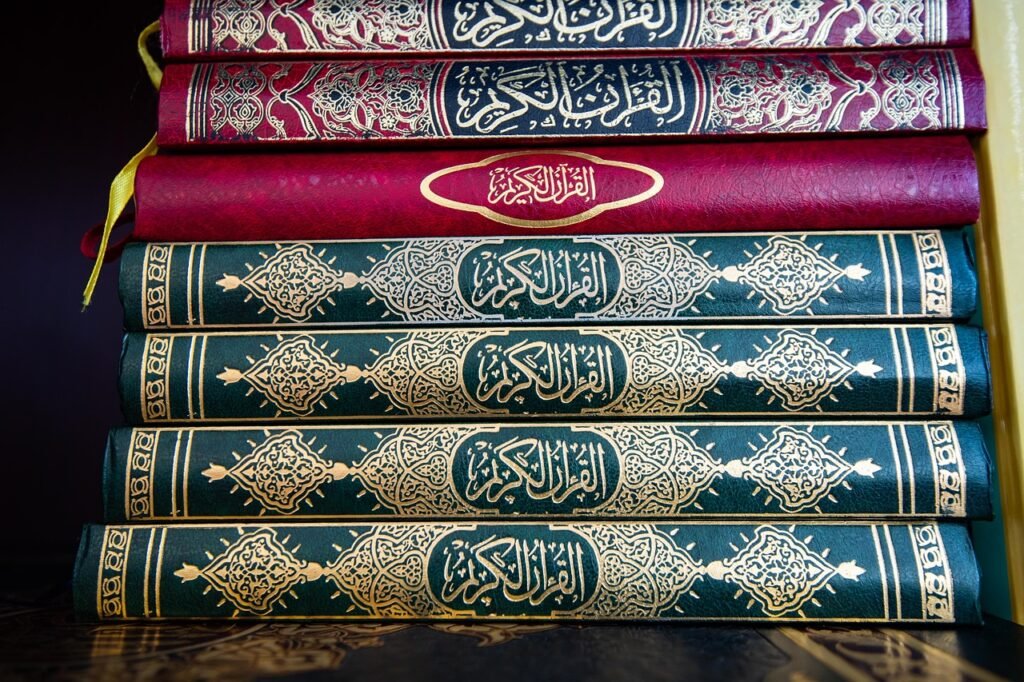
Among modern varieties, the Najdi and Hijazi dialects of Saudi Arabia stand out. These dialects come from the heart of the Arabian Peninsula, the birthplace of the Quran. Historically, these regions were less exposed to foreign languages. They also maintained oral traditions that preserved much of the old grammar and pronunciation.
Najdi Arabic, spoken in the central region of Saudi Arabia, keeps many characteristics of Classical Arabic.
Examples include:
- Retention of the “qaf” sound as “q,” similar to Quranic pronunciation
- Use of the glottal stop “hamza” in positions where other dialects drop it
- Preservation of some verb conjugations that disappeared elsewhere
- Limited borrowing from other languages
In rural and Bedouin forms of Najdi Arabic, the grammar is often more complex than in urban speech. This pattern reflects what existed in early Arabic before simplification occurred in cities.
Hijazi Arabic, spoken in the western region around Mecca and Medina, also has historical importance. The Quran was revealed in this area, and early Islamic scholars came from here. While modern Hijazi speech has changed under urban and international influence, it still keeps certain features that connect it to its Classical roots. In traditional Bedouin Hijazi speech, you can still hear the rhythm and structure of older Arabic poetry and recitation.
Outside Saudi Arabia, a few other dialects also retain strong links to Classical Arabic.
For example:
- Yemeni Arabic, especially in the highlands, preserves ancient vocabulary and some archaic sounds. Yemen was home to old Semitic languages, and its isolation helped maintain a conservative form of Arabic.
- Omani Arabic keeps old grammatical patterns and conservative verb forms, influenced less by colonial languages than dialects in the Levant or North Africa.
- Sudanese Arabic shares some Classical traits because of its connection to early Islamic migration and limited external influence until recent times.
In contrast, dialects from the Levant, Egypt, and North Africa have moved further from the Classical model. These regions experienced long exposure to other languages through trade, conquest, and colonization. Their speech simplified over time to make daily communication easier across diverse populations. For example, Egyptian Arabic dropped many of the case endings and changed the pronunciation of several consonants. North African Arabic added many Berber and French words.
That does not make these dialects less valuable. They simply developed to meet the needs of their speakers. But from a linguistic standpoint, they are more distant from Quranic Arabic.
If your goal is to understand which dialect sounds and functions most like the Quranic form, the evidence points toward Najdi Arabic. It retains the greatest number of Classical features and remains close to the structure that early grammarians described. This is why many scholars of Arabic linguistics use Najdi or Bedouin dialects as examples when explaining ancient grammatical rules.
However, it is important to understand that no modern dialect matches Quranic Arabic completely. The Quran uses a formal and poetic style that does not belong to any spoken variety. It represents the highest level of Arabic expression. Even the most conservative dialects are simplified versions shaped by everyday use.
The real closeness lies not in identical grammar but in shared linguistic roots. All Arabic dialects descend from the same source. They all carry traces of Quranic Arabic in their sound, rhythm, and vocabulary. When an Arabic speaker listens to Quranic recitation, the words are familiar even if the structure is formal. That connection across dialects is what keeps Arabic united despite its diversity.
For students of Arabic, this understanding helps in choosing what to study. Learning Modern Standard Arabic gives you access to the structure and vocabulary of the Quranic language. Studying a conservative dialect like Najdi or Hijazi helps you hear how that structure lives in spoken form. Together, they form a bridge between the sacred text and modern communication.

Advice for Learners
Understanding which Arabic dialect is closest to the Quran is only the first step in learning the language. For students, the key is not to focus exclusively on a single dialect, but to build a foundation in Classical Arabic and Modern Standard Arabic while exploring spoken forms.
Start by mastering the basics of grammar, sentence structure, and vocabulary found in the Quran. Memorization of vocabulary, familiarization with verb patterns, and regular reading of Quranic texts help develop both comprehension and pronunciation. Listening to recitations from native speakers, especially from the Arabian Peninsula, reinforces the natural sound of the language.
Once you gain confidence in Classical and Modern Standard Arabic, exposure to a conservative dialect like Najdi or Hijazi helps connect what you have learned to spoken Arabic. Understanding how the sounds, grammar, and vocabulary of the Quran survive in modern speech deepens your appreciation for the language and makes learning more practical for conversation.
Practical advice for learners:
- Dedicate time daily to Quranic reading alongside modern Arabic practice
- Focus on pronunciation and listening comprehension before advanced grammar
- Compare written forms with spoken dialects to notice similarities and differences
- Engage with native speakers or recordings from regions closest to Quranic Arabic
- Use online resources and structured courses to maintain consistent progress
At Ramdani Arabic Academy, we provide tailored courses that integrate these approaches. Our lessons cover Classical Arabic, Modern Standard Arabic, and key dialects to help learners navigate the full spectrum of the language. We offer interactive exercises, video lessons, and articles that make connections between historical forms, Quranic structures, and modern usage clear and accessible.
By learning through our academy, you gain not just the ability to read the Quran, but the tools to communicate across the Arab world. Our courses emphasize historical context, linguistic accuracy, and practical application, bridging the gap between sacred text and contemporary speech.
I, Ramdani Mohamed, founded this academy to help Arabic learners worldwide. My goal is to make the language understandable, accessible, and relevant. I have personally guided hundreds of students from diverse backgrounds. I design lessons that balance scholarly accuracy with approachable teaching methods, drawing from years of study and teaching experience.
Learning Arabic is a journey that combines history, culture, and communication. Understanding the dialect closest to the Quran provides direction, but the real achievement lies in connecting with the language fully. Every lesson, every recitation, and every conversation brings you closer to the richness of Arabic and the beauty of its heritage.
By combining formal study with exposure to spoken forms, students can gain fluency, confidence, and a deep appreciation for the language. At Ramdani Arabic Academy, we guide learners on this journey, providing structured learning and personal support every step of the way.