5 Easy Ways to Ask Prices in Arabic with Confidence
When you enter a supermarket in a new country, the first thing that catches your eye is the variety of products and the noise of people moving through the aisles. You see labels, numbers, colors, and different brands. But when you don’t speak the local language fluently, a simple thing like asking for the price can feel difficult. You hesitate. You worry about saying it wrong. You think, “How do I ask this politely in Arabic?”
Supermarkets are one of the best places to practice your Arabic. They give you real contact with native speakers, clear visual context, and natural daily expressions. You deal with signs, numbers, and short exchanges. You hear how people ask questions, how they respond, and how they interact. Each conversation teaches you something new about the language and the culture behind it.
In Arabic, asking for the price is not only about numbers. It’s also about tone, politeness, and cultural awareness. The way you ask matters. The words you choose can change how people see you. A friendly greeting, a respectful question, and a simple thank you make a difference. Many learners focus only on grammar or vocabulary, but they forget that communication is built on connection.
When you stand in front of a shelf full of products and you want to know the price, there are several ways to ask. You might want to know the cost of something not clearly labeled, or you might want to compare prices between two items. You may also want to confirm if there’s a discount or if the price you see includes tax. Each of these situations has a natural way to express it in Arabic. Learning these forms helps you speak more naturally and understand how locals communicate in daily life.
Arabic is spoken in many countries. The way people ask for the price can vary slightly from one region to another. In Egypt, Morocco, Saudi Arabia, or Lebanon, people may use different expressions. Some forms are formal, others are casual. Understanding this difference helps you choose the right words for the right moment. In this article, we will explore both.
For many learners, the supermarket becomes a small classroom. Every label teaches vocabulary. Every cashier exchange tests listening skills. Every small talk at the counter builds confidence. You don’t need a textbook to practice; you need curiosity and patience. When you learn to ask for the price confidently, you start to feel more independent. You no longer rely on translations or help from others. You take part in real life.
This topic may look simple, but it touches an important part of communication—interaction with people in daily situations. By mastering how to ask for the price in Arabic, you build a habit of thinking in Arabic, not just translating. You develop practical skills that you can use every day.
In the next sections, we will learn useful phrases, pronunciation tips, cultural notes, and real examples from different Arab countries. You will see how these expressions work in real conversations and how to use them naturally.
Useful Arabic Phrases and Expressions for Asking Prices
When you enter a supermarket in an Arabic-speaking country, you will notice that not every product has a clear price tag. Sometimes prices are written on small labels. Sometimes they are missing. In these moments, you need to ask. Knowing how to ask for the price correctly helps you sound natural and polite.
Below are the most common ways to ask for the price in Arabic.
1. The Basic Question
- بِكَمْ هَذَا؟
Bikam hādhā?
Meaning: “How much is this?”
This is the simplest and most common form. You can use it anywhere, in both formal and informal situations. You can point to the item while saying it. It works in supermarkets, markets, and shops.
Example:
You point to a bottle of water and ask the cashier:
بِكَمْ هَذِهِ الْمَاء؟
Bikam hādhihi al-mā’?
“How much is this water?”
2. The Polite Form
- كَمْ سِعْرُ هَذَا مِنْ فَضْلِك؟
Kam si‘ru hādhā min faḍlik?
Meaning: “What is the price of this, please?”
This form is polite and slightly formal. The phrase من فضلك (min faḍlik) means “please.” You can use it when you want to show respect, especially when speaking with older people, employees, or in more professional environments.
If you speak to a woman, you say من فضلكِ (min faḍliki).
3. Asking About Specific Items
If you want to ask about something specific, mention the item’s name.
Examples:
- كَمْ سِعْرُ الْحَلِيب؟
Kam si‘ru al-ḥalīb?
“What is the price of the milk?” - كَمْ سِعْرُ الْخُبْز؟
Kam si‘ru al-khubz?
“What is the price of the bread?”
When you use specific words, you show that you already know some vocabulary, which helps people understand you better.
4. Asking About Discounts or Offers
In many supermarkets, there are special offers or discounts. You can ask:
- هَلْ هُنَاكَ خَصْم؟
Hal hunāka khaṣm?
“Is there a discount?” - هَلْ هَذِهِ فِي الْعَرْض؟
Hal hādhihi fī al-‘arḍ?
“Is this on offer?”
This shows interest and awareness of local shopping culture.
5. Confirming the Price
Sometimes you hear the price but want to make sure you understood it correctly. You can say:
- عَفْوًا، كَمْ قُلْتَ؟
‘Afwan, kam qulta?
“Sorry, how much did you say?”
If you speak to a woman:
عَفْوًا، كَمْ قُلْتِ؟ (‘Afwan, kam qulti?)
You can also repeat the number you heard to confirm:
عَشَرَة دَرَاهِم؟ (‘Ashara darāhim?) “Ten dirhams?”
6. Understanding the Reply
When you ask for the price, you’ll usually hear numbers. Practice listening carefully to Arabic numbers from 1 to 100. Many learners confuse similar sounds, especially between th (ث) and s (س).
Example:
- هَذَا بِخَمْسَة دَنَانِير.
Hādhā bi-khamsa danānīr.
“This is five dinars.” - هَذَا بِعِشْرِينَ جُنَيْه.
Hādhā bi-‘ishrīn junayh.
“This is twenty pounds.”
7. Ending the Exchange Politely
Always end the conversation with a simple “thank you.”
- شُكْرًا.
Shukran.
Or, more politely:
- شُكْرًا جَزِيلًا.
Shukran jazīlan.
“Thank you very much.”
A smile and a thank you leave a good impression and make communication smoother.
Mastering these short phrases helps you act confidently in real-life situations. You don’t need to memorize grammar rules. Focus on using these expressions often. The more you repeat them, the more natural they sound.
Common Situations and Real Conversations in Supermarkets
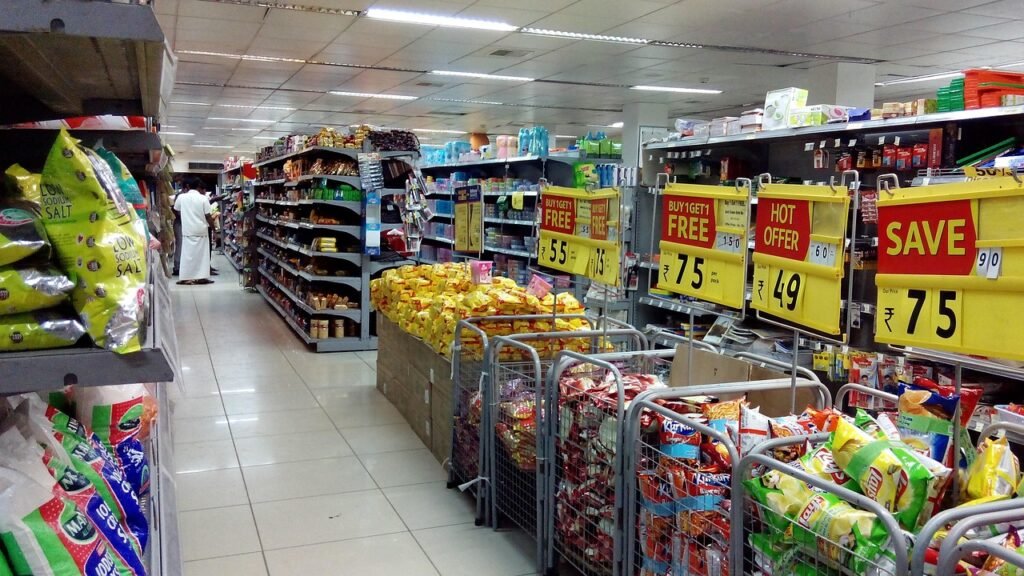
Learning how to ask for the price is one thing. Using it naturally in real situations is another. Supermarkets create small but useful opportunities for communication. You face different moments where you can practice short exchanges and build confidence.
Below are common situations you may face in an Arabic-speaking supermarket, with real examples of how conversations usually happen.
Situation 1: Asking About an Unlabeled Item
You see a product on the shelf with no price tag. You want to know how much it costs.
Customer: السلام عليكم
As-salāmu ‘alaykum
“Peace be upon you.”
Employee: وعليكم السلام
Wa ‘alaykum as-salām
“And peace be upon you.”
Customer: من فضلك، بِكَمْ هَذَا؟
Min faḍlik, bikam hādhā?
“Please, how much is this?”
Employee: هَذَا بِثَلَاثَة دَرَاهِم.
Hādhā bi-thalātha darāhim.
“This is three dirhams.”
Customer: شكرًا.
Shukran.
“Thank you.”
This short dialogue shows how direct and polite exchanges happen. The key is tone. Speak clearly and smile.
Situation 2: Comparing Two Items
You want to buy juice but see two brands. You want to ask which one is cheaper.
Customer: من فضلك، كَمْ سِعْرُ هَذَا الْعَصِير؟
Min faḍlik, kam si‘ru hādhā al-‘aṣīr?
“What is the price of this juice?”
Employee: هَذَا بِخَمْسَة رِيَالَات.
Hādhā bi-khamsa riyālāt.
“This is five riyals.”
Customer: وَهَذَا؟
Wa hādhā?
“And this one?”
Employee: هَذَا بِأَرْبَعَة رِيَالَات.
Hādhā bi-arba‘a riyālāt.
“This one is four riyals.”
Customer: سَأَأْخُذُ هَذَا.
Sa’akhudhu hādhā.
“I’ll take this one.”
These short exchanges help you practice basic numbers and vocabulary.
Situation 3: Asking if Something Is on Sale
You notice a big red sign but don’t understand it. You want to confirm if there’s a discount.
Customer: عَفْوًا، هَلْ هُنَاكَ خَصْم عَلَى هَذَا؟
‘Afwan, hal hunāka khaṣm ‘alā hādhā?
“Excuse me, is there a discount on this?”
Employee: نَعَم، خَصْمُ عَشَرَة فِي الْمِائَة.
Na‘am, khaṣmu ‘ashara fi al-mi’a.
“Yes, ten percent discount.”
Customer: جَيِّد، شكرًا جَزِيلًا.
Jayyid, shukran jazīlan.
“Good, thank you very much.”
This exchange helps you understand how locals talk about sales and percentages.
Situation 4: Checking Prices at the Counter
Sometimes you ask about the price after you reach the cashier.
Cashier: مَسَاء الْخَيْر.
Masā’ al-khayr.
“Good evening.”
Customer: مَسَاء النُّور. مِنْ فَضْلِك، كَمْ سِعْرُ هَذَا؟
Masā’ an-nūr. Min faḍlik, kam si‘ru hādhā?
“Good evening. Please, what’s the price of this?”
Cashier: هَذَا بِسَبْعَة دَرَاهِم.
Hādhā bi-sab‘a darāhim.
“This is seven dirhams.”
Customer: طَيِّب، سَآخُذُ اثْنَيْن.
Ṭayyib, sa’ākhudhu ithnayn.
“Okay, I’ll take two.”
Cashier: مَجْمُوعُهَا أَرْبَعَةَ عَشَرَ دِرْهَم.
Majmū‘uhā arba‘ata ‘ashar dirham.
“The total is fourteen dirhams.”
These moments help you practice both asking and understanding numbers.
Situation 5: Asking for Help Finding Prices
If you can’t find a price label or barcode, you can ask an employee for help.
Customer: عَفْوًا، لَا أَرَى السِّعْر.
‘Afwan, lā arā as-si‘r.
“Excuse me, I don’t see the price.”
Employee: أَيُّ مُنْتَج تَقْصِد؟
Ayyu muntaj taqṣid?
“Which product do you mean?”
Customer: هَذَا الْجُبْن.
Hādhā al-jubn.
“This cheese.”
Employee: لَحْظَة، سَأَتَأَكَّد.
Laḥẓa, sa’ata’akkad.
“One moment, I’ll check.”
Then the employee returns with the answer. This kind of interaction is common, and employees appreciate polite speech.
Situation 6: When You Don’t Understand the Price
If you don’t catch what the person says, don’t panic. Ask them to repeat.
Customer: عَفْوًا، مُمْكِن تُعِيد؟
‘Afwan, mumkin tu‘īd?
“Excuse me, can you repeat?”
Employee: بِخَمْسَة وَثَلَاثِينَ جُنَيْه.
Bi-khamsa wa-thalāthīn junayh.
“Thirty-five pounds.”
Practice listening carefully to how numbers sound in different accents. This improves your comprehension quickly.
Real conversations like these train your ear and help you build automatic responses. You start to think less and speak more naturally. Each exchange, even short, builds fluency.
Cultural Tips and Etiquette When Asking for Prices in Arabic Countries
Learning the language is important, but understanding how people interact is just as important. Culture shapes the way people speak, ask questions, and respond. When you ask for the price in a supermarket in an Arab country, your words matter, but your behavior matters too.
Below are practical cultural tips that help you communicate respectfully and confidently.
1. Always Greet First
In most Arab countries, people start conversations with greetings. Even in a supermarket, a simple السلام عليكم (as-salāmu ‘alaykum) shows respect. It opens communication politely.
The reply is وعليكم السلام (wa ‘alaykum as-salām).
Skipping the greeting can sound cold or impatient. Arabs value politeness and connection, even in short exchanges.
2. Use Polite Words
Always use من فضلك (min faḍlik) for “please” and شكرًا (shukran) for “thank you.” These small words change the tone of your speech. They show appreciation.
If you talk to a woman, say من فضلكِ (min faḍliki). Gender agreement shows attention to detail and respect for grammar and culture.
3. Keep a Calm Tone
Raising your voice or showing frustration is not acceptable in most Arab cultures, especially in public places. Supermarkets are busy, but patience is valued. Speak clearly, not loudly.
A calm tone makes your words easier to understand and creates a positive impression.
4. Respect Personal Space
Many supermarkets in Arab countries are crowded, but personal space still matters. Don’t touch products in someone’s basket or interrupt conversations. Wait until the employee finishes helping another customer.
This patience is part of cultural respect.
5. Use Simple Language
When you’re a learner, use short and clear sentences. People appreciate your effort to speak Arabic. Don’t worry about mistakes. Locals often try to help when they see your effort.
Example: Instead of saying a long sentence, use بِكَمْ هَذَا؟ (bikam hādhā?) or كَمْ سِعْرُ هَذَا؟ (kam si‘ru hādhā?). Short is better.
6. Understand Regional Differences
Arabic is not the same everywhere. Each country has its own dialect and expressions. Knowing the difference helps you adapt.
Examples:
- In Egypt, people often say بكام ده؟ (bikām da?)
- In Morocco, they may say بشحال هادا؟ (bshḥāl hāda?)
- In Lebanon, you may hear قديش هيدا؟ (addēsh hayda?)
These are all informal but very common. Learning local expressions helps you connect with people and understand their way of speaking.
7. Show Appreciation
Even after a short exchange, say شكرًا (shukran) or الله يبارك فيك (Allāh ybārik fīk) which means “May God bless you.” This phrase is common and friendly.
Appreciation leaves a good impression and builds trust, especially if you are a foreigner learning the language.
8. Be Aware of Time and Context
If the store is busy or the cashier is dealing with many customers, keep your question short. Avoid long conversations at peak hours. Arabs value friendliness but also respect time and order.
Pick the right moment to ask your question.
9. Practice Nonverbal Communication
Your facial expressions and gestures matter. A friendly smile helps. Avoid pointing with your finger directly at people; use your whole hand instead.
These small gestures communicate respect and are noticed more than words.
10. Understand That Supermarkets Are Not Souks
In a supermarket, prices are fixed. You don’t negotiate. Bargaining is only common in open markets or souks. Asking for discounts in a supermarket may sound strange.
If you want to know about offers, use phrases like:
هَلْ هُنَاكَ خَصْم؟ (hal hunāka khaṣm?)
“Is there a discount?”
This question is polite and acceptable.
Respecting these cultural points helps you move from memorized phrases to real communication. You start to sound natural. You make better connections with people. You also avoid misunderstandings that come from cultural gaps.
Each small act—greeting, smiling, using polite words—builds your reputation as someone who respects the culture and language. This is how you grow as an Arabic learner.
Vocabulary and Useful Expressions About Prices and Shopping in Arabic
To speak naturally in supermarkets, you need more than just phrases. You need practical vocabulary. Knowing the common words for money, numbers, products, and shopping actions helps you build complete sentences and understand replies faster.
Below is a collection of useful Arabic vocabulary and expressions related to prices and supermarket shopping.
1. Money and Currency Words
- سِعْر (si‘r) – price
- ثَمَن (thaman) – cost
- نَقُود (nuqūd) – money
- عُمْلَة (‘umla) – currency
- فَاتُورَة (fātūra) – bill or receipt
- خَصْم (khaṣm) – discount
- عَرْض (‘arḍ) – offer or promotion
- ضَرِيبَة (ḍarība) – tax
- مَجَّانًا (majjānan) – free
2. Common Currency Names in the Arab World
Each country uses a different currency. Knowing them helps you recognize prices and conversations.
- دِرْهَم (dirham) – used in Morocco and UAE
- دِينَار (dīnār) – used in Jordan, Tunisia, and Algeria
- جُنَيْه (junayh) – used in Egypt and Sudan
- رِيَال (riyāl) – used in Saudi Arabia, Qatar, and Yemen
- لِيرَة (līra) – used in Lebanon and Syria
- دُولَار (dūlār) – used in some international contexts
Example:
بِكَمْ الدِرْهَم فِي الْيَوْم؟ (bikam ad-dirham fi al-yawm?)
“How much is the dirham today?”
3. Numbers You Hear Most Often
Practice listening to and pronouncing numbers. They appear in every price conversation.
1 – واحد (wāḥid)
2 – اثنان (ithnān)
3 – ثلاثة (thalātha)
4 – أربعة (arba‘a)
5 – خمسة (khamsa)
6 – ستة (sitta)
7 – سبعة (sab‘a)
8 – ثمانية (thamāniya)
9 – تسعة (tis‘a)
10 – عشرة (‘ashara)
Tens and hundreds:
20 – عِشْرُون (‘ishrūn)
30 – ثَلَاثُون (thalāthūn)
40 – أَرْبَعُون (arba‘ūn)
50 – خَمْسُون (khamsūn)
100 – مِائَة (mi’a)
Example:
هَذَا بِخَمْسَة وَعِشْرِينَ دِرْهَم.
(Hādhā bi-khamsa wa-‘ishrīn dirham.)
“This costs twenty-five dirhams.”
4. Product and Shopping Vocabulary
- مُنْتَج (muntaj) – product
- سِلْعَة (sil‘a) – item or good
- قِسْم (qism) – section or department
- مَجْمُوعَة (majmū‘a) – pack or set
- عَرْبَة التَّسَوُّق (‘arabat at-tasawwuq) – shopping cart
- سَلَّة (salla) – basket
- مَحَاسِب (muḥāsib) – cashier
- مُوَظَّف (muwaẓẓaf) – employee
- زَبُون (zabūn) – customer
5. Useful Phrases Related to Shopping
- أُرِيدُ أَنْ أَشْتَرِي… (urīdu an ashtarī…)
“I want to buy…” - أَيْنَ أَجِد…؟ (ayna ajid…?)
“Where can I find…?” - هَلْ هُنَاكَ خَصْم؟ (hal hunāka khaṣm?)
“Is there a discount?” - هَلْ السِّعْرُ ثَابِت؟ (hal as-si‘r thābit?)
“Is the price fixed?” - مَتَى يَنْتَهِي الْعَرْض؟ (matā yantahī al-‘arḍ?)
“When does the offer end?” - أُرِيدُ فَاتُورَة، مِنْ فَضْلِك. (urīdu fātūra, min faḍlik.)
“I want a receipt, please.” - كَمِ الْمَجْمُوع؟ (kam al-majmū‘?)
“How much is the total?”
6. Words About Quantity and Packaging
- وَاحِد (wāḥid) – one
- اثْنَان (ithnān) – two
- قِطْعَة (qiṭ‘a) – piece
- كِيلُو (kīlū) – kilo
- نِصْف كِيلُو (niṣf kīlū) – half kilo
- صُنْدُوق (ṣundūq) – box
- زُجَاجَة (zujāja) – bottle
- عُلْبَة (‘ulba) – can or package
Example:
أُرِيدُ عُلْبَتَيْنِ مِنَ الْعَصِير.
(Urīdu ‘ulbatayn mina al-‘aṣīr.)
“I want two cans of juice.”
7. Useful Verbs for Shopping
- اِشْتَرَى (ishtarā) – to buy
- بَاعَ (bā‘a) – to sell
- دَفَعَ (dafa‘a) – to pay
- أَخَذَ (akhadha) – to take
- اِخْتَارَ (ikhtāra) – to choose
- جَرَّبَ (jarraba) – to try or test
- سَأَلَ (sa’ala) – to ask
Example:
دَفَعْتُ بِالْبِطَاقَة.
(Dafa‘tū bil-biṭāqa.)
“I paid by card.”
8. Expressions You Hear from Cashiers
- هَلْ تُرِيدُ كِيسًا؟ (hal turīdu kīsan?)
“Do you want a bag?” - هَلْ عِنْدَكَ بَطَاقَة نِقَاط؟ (hal ‘indaka biṭāqat niqāṭ?)
“Do you have a points card?” - الْمَجْمُوع … (al-majmū‘…)
“The total is…” - شُكْرًا لِزِيَارَتِك. (shukran li-ziyāratik.)
“Thank you for your visit.”
This vocabulary forms the base of real communication in supermarkets. Use it to build your confidence in daily conversations. Practice speaking them aloud and listen to native speakers whenever you can. Each word helps you sound more natural and prepares you for real interactions.
Practical Exercises and Situational Practice for Learners
Learning phrases and vocabulary is useful, but to speak naturally you must practice using them in real or simulated situations. Practice turns memory into skill. Below are simple and effective exercises you can do to train your ear, voice, and confidence when asking for prices in Arabic.
1. Listen and Repeat
Find short supermarket dialogues online or record your own using the examples from earlier parts.
Listen to how native speakers pronounce words, then repeat them aloud.
Focus on tone, not just vocabulary.
Practice daily for 10 minutes.
Start with simple questions:
- بِكَمْ هَذَا؟ (Bikam hādhā?)
- كَمْ سِعْرُ هَذَا مِنْ فَضْلِك؟ (Kam si‘ru hādhā min faḍlik?)
Repeat them until your pronunciation feels natural and automatic.
2. Practice with Real Objects
Take products from your kitchen or fridge and practice asking about them.
Point at a bottle of water or a bag of rice and say:
- بِكَمْ هَذِهِ؟ (Bikam hādhihi?)
- كَمْ سِعْرُ الرُّز؟ (Kam si‘ru ar-ruz?)
Do this regularly. It helps you connect words to real objects and remember vocabulary longer.
3. Role Play with a Partner
If you have a study partner, act out supermarket situations.
Switch roles between customer and employee.
Use realistic phrases and numbers.
Example scenario:
Customer: السلام عليكم، بِكَمْ هَذَا الْحَلِيب؟
Employee: هَذَا بِثَلَاثَة دَنَانِير.
Customer: جَيِّد، سَآخُذُ اثْنَيْن.
This builds fluency and helps you speak without thinking too much.
4. Shadowing Exercise
Shadowing means speaking at the same time as a native recording.
Play a short Arabic clip about shopping and repeat every line immediately as you hear it.
Do not pause the recording. Try to match rhythm and speed.
This trains pronunciation, listening, and natural speech flow.
5. Supermarket Observation
If you live in an Arabic-speaking country, visit a supermarket and observe how people talk.
Listen to how they ask for prices, how cashiers respond, and what expressions repeat often.
Take notes quietly.
Then practice those phrases later at home.
If you don’t live in an Arabic country, watch Arabic vlogs or shopping videos online. Listen to real language, not textbook examples.
6. Number Recognition Drill
Take a list of prices in Arabic and practice saying and hearing them.
Ask a friend to read numbers randomly and try to write them down.
Example:
- خَمْسَة وَعِشْرُون → 25
- سَبْعَة وَثَلَاثُون → 37
- مِائَة وَخَمْسَة → 105
Repeat until you can recognize and respond quickly. Numbers are key in price conversations.
7. Recording Yourself
Record yourself asking questions like a real customer.
Play the recording and listen for mistakes in pronunciation or tone.
Try again until you sound smooth and confident.
This method helps you self-correct without needing a teacher every time.
8. Real Practice Challenge
Choose one supermarket or store where people speak Arabic.
Use at least one Arabic phrase when asking for a price.
Even if you only say “بِكَمْ هَذَا؟” it counts.
Each small step builds comfort and reduces hesitation.
The goal is not perfection. The goal is communication.
9. Vocabulary Review Game
Write words like سِعْر, خَصْم, فَاتُورَة, دِرْهَم, رِيَال on small papers.
Pick one randomly and make a sentence using it.
Example: If you pick خَصْم, say “هَلْ هُنَاكَ خَصْم؟”
This simple exercise strengthens recall speed and keeps vocabulary active.
10. Combine Listening, Speaking, and Reading
Don’t study these skills separately. Combine them.
When you hear a new phrase, read it, repeat it, and write it.
This full practice cycle improves memory and pronunciation together.
Practical repetition creates fluency.
Fluency makes communication natural.
Every small practice session brings you closer to speaking Arabic comfortably in real-life settings like supermarkets, restaurants, or local shops.
Common Mistakes Learners Make When Asking for Prices in Arabic
Learning Arabic for daily use means making mistakes. Everyone does. But when you know the most common ones, you can avoid them early. Asking for the price seems simple, yet small errors in pronunciation, tone, or wording can cause confusion or sound impolite.
Here are the most frequent mistakes Arabic learners make in supermarkets and how to fix them.
1. Forgetting to Greet
Many learners go straight to the question. They say بِكَمْ هَذَا؟ without greeting first.
In Arabic culture, this can sound abrupt.
Always start with السلام عليكم.
It sets the right tone. Even a short مرحبًا works in casual places.
It’s a small step that changes how people respond to you.
2. Mixing Masculine and Feminine Words
Arabic distinguishes between masculine and feminine forms.
Learners often forget this when using demonstrative words like “this.”
Examples:
- Masculine: بِكَمْ هَذَا؟ (bikam hādhā?)
- Feminine: بِكَمْ هَذِهِ؟ (bikam hādhihi?)
If you ask about a feminine noun like زُجَاجَة (bottle) or عُلْبَة (can), use هَذِهِ.
If the noun is masculine like خُبْز (bread) or حَلِيب (milk), use هَذَا.
This mistake is common but easy to fix with awareness.
3. Mispronouncing Numbers
Numbers cause confusion for many learners.
They are often said quickly in supermarkets, and accents change their sound.
Example:
- ثَلَاثَة (thalātha) – three
- ثَلَاثُون (thalāthūn) – thirty
If you mix them up, you might think something costs 3 instead of 30.
Train your ear with listening drills. Focus on real conversations, not robotic voices.
4. Using Dialect in the Wrong Context
Arabic has many dialects. Some phrases work in one country but not in another.
Example:
- بشحال هذا؟ is common in Morocco
- بكام ده؟ is Egyptian
- قديش هيدا؟ is Lebanese
If you’re unsure, stick to Modern Standard Arabic (MSA): بِكَمْ هَذَا؟
It’s understood everywhere and always correct.
5. Translating Directly from English
Many learners think in English first. They translate sentences word for word.
This often leads to unnatural phrases like ما هو السعر من هذا؟, which is incorrect.
Arabic prefers short, direct forms.
Say بِكَمْ هَذَا؟ or كَمْ سِعْرُ هَذَا؟ instead.
Arabic is efficient. Avoid extra words.
6. Ignoring Politeness Words
Some learners skip من فضلك or شكرًا because they think they’re not necessary.
But in Arabic culture, politeness is not optional.
It shows respect and makes people more open to help.
Say من فضلك before your question and شكرًا after the answer.
It’s a simple habit that leaves a good impression.
7. Using the Wrong Tone
Tone carries meaning.
A flat or impatient voice can sound rude, even when your words are correct.
Practice saying your phrases with a calm, natural tone.
Smile when you speak. It softens your accent and builds connection.
8. Asking to Bargain in a Supermarket
Some learners try to negotiate prices like in open markets.
In most supermarkets, prices are fixed.
Bargaining here feels inappropriate.
If you want to ask about offers, use هَلْ هُنَاكَ خَصْم؟
It’s polite and fits the setting.
9. Forgetting to Confirm the Number
When the cashier says the total quickly, learners often misunderstand and pay the wrong amount.
Always repeat the number to confirm.
Example:
عَشَرَة دَرَاهِم؟ (‘ashara darāhim?)
“Ten dirhams?”
Repeating helps you confirm and improves your listening skills.
10. Overcomplicating Sentences
Beginners sometimes add too many words trying to sound advanced.
This makes speech heavy and confusing.
Instead of:
هل يمكن أن تخبرني كم هو السعر لهذا المنتج؟
Say simply:
بِكَمْ هَذَا؟
Clear, short, and natural speech is easier for everyone.
Mistakes are part of learning.
The goal is not to avoid them completely but to notice and correct them.
Each time you use Arabic in a real place, you build confidence.
Each mistake you fix moves you closer to fluency.
Practical Advice for Using Arabic Confidently in Daily Shopping
Speaking Arabic in real life takes courage. Many learners understand words but hesitate to speak. Confidence comes from simple habits, not talent. The goal is not to sound perfect but to communicate clearly and respectfully. Here are practical steps that help you build confidence while shopping in Arabic.
1. Start Small
Don’t wait until you master grammar. Use short phrases from the first day.
Say بِكَمْ هَذَا؟ when you see something interesting.
Even one correct sentence builds progress.
Each small exchange adds experience and removes fear.
2. Repeat Real-Life Phrases
Repetition trains your tongue to move easily between sounds.
Use supermarket phrases daily, even at home.
Pretend you are at the counter and say:
كَمْ سِعْرُ هَذَا؟ or هَلْ هُنَاكَ خَصْم؟
Speak out loud.
Hearing yourself builds natural rhythm and pronunciation memory.
3. Focus on Listening Before Speaking
When you enter a store, listen first.
Notice how people ask questions and how employees reply.
You’ll hear patterns.
Try to copy the same tone and rhythm.
Real listening gives you useful input.
Your ears learn before your mouth does.
4. Use Your Hands to Support Words
If you forget a word, use gestures.
Point to the item politely while asking بِكَمْ هَذَا؟
This helps people understand you quickly.
Don’t panic about missing vocabulary.
Communication is about meaning, not perfection.
5. Learn Local Words Gradually
If you live or travel in an Arabic country, listen for dialect.
Each region uses different terms for money or items.
Learn a few local expressions, but keep Modern Standard Arabic as your base.
It keeps you understood everywhere.
6. Speak Slowly
Many learners try to speak fast to sound fluent.
That often creates confusion.
Slow down.
Pronounce each word clearly.
Native speakers will understand you better and answer slower too, which helps you follow.
7. Don’t Fear Making Mistakes
Fear stops learning.
You will mispronounce words. You will forget forms. That’s normal.
What matters is trying.
Most native speakers respect learners who make an effort.
They often smile and help.
Every mistake you make in a supermarket is a free lesson in language and culture.
8. Practice Common Numbers Daily
Money involves numbers every time.
Memorize them.
Say them aloud when you see prices or read receipts.
Example: when you see “12.50,” say اِثْنَا عَشَر وَنِصْف.
Make it part of your routine.
9. Use Arabic Everywhere You Can
Language grows only through use.
Don’t limit it to class or study time.
Use Arabic when paying bills, ordering food, or asking directions.
The more you use it, the more natural it becomes.
Even five minutes of speaking a day improves fluency faster than hours of silent study.
10. Build a Small Phrase Notebook
Keep a small notebook or phone list with phrases you use often.
Write them in Arabic and your native language.
Review it when you shop.
Example entries:
- أُرِيدُ أَنْ أَعْرِفَ السِّعْر. – I want to know the price.
- كَمِ الْمَجْمُوع؟ – How much is the total?
- هَلْ هُنَاكَ خَصْم؟ – Is there a discount?
Practical review keeps the language active.
11. Record and Evaluate Yourself
After each real-life exchange, write what happened.
What did you say right? What was difficult?
Recording your experiences helps you measure progress.
Over time, you’ll see how fast your comfort grows.
12. Practice Politeness Every Time
Politeness makes language powerful.
Start with السلام عليكم and end with شكرًا.
It’s short, clear, and effective everywhere.
Respectful speech opens doors faster than perfect grammar.
Confidence in Arabic grows through habit, not memorization.
Each greeting, question, or thank you builds fluency.
When you stop translating and start interacting, Arabic becomes part of your life, not just a subject you study.
Final words
Learning how to ask for prices in Arabic is more than vocabulary. It’s a window into daily life and cultural respect. When you enter a supermarket, greet, ask clearly, listen carefully, and speak with confidence. Each small act of communication teaches you rhythm, tone, and real-world Arabic.
Every learner starts unsure. Fluency comes from using what you know, not waiting until you know everything. If you can say بِكَمْ هَذَا؟, you’ve already taken a real step into the Arabic world.
Practical Takeaways
- Always greet before asking
- Use short, clear questions
- Match masculine and feminine forms
- Listen carefully to numbers
- Speak politely and slowly
- Practice every day in real situations
Arabic responds to consistency. Ten minutes of daily practice is stronger than one long session once a week. Speak wherever you can, even if it’s with yourself. The more Arabic you hear and use, the faster your brain connects meaning to sound.
Confidence doesn’t come from knowing every rule. It comes from practice. You gain it by trying, failing, and trying again. Mistakes are not proof of failure. They are signs of growth.
Advice for Learners
Keep Arabic close to your routine. Use it when buying food, asking for directions, or greeting people. Read price tags, listen to cashiers, and repeat their words in your head. Real Arabic lives in everyday exchanges, not just textbooks.
If you study online, look for real dialogue videos. Repeat what you hear. Record yourself and compare. Focus on meaning, not memorization. Arabic will slowly become part of how you think, not just something you study.
When you feel shy, remember that communication is about connection, not perfection. The person in front of you doesn’t expect perfect Arabic. They expect sincerity. Speak honestly, and they will understand you.
About Ramdani Arabic Academy
Ramdani Arabic Academy is an online platform that helps learners around the world master Arabic through structured lessons, practical exercises, and cultural immersion. The academy focuses on language as a living tool—something to use every day, not just learn from books.
We provide courses for all levels.
We cover Modern Standard Arabic, dialects, pronunciation, and writing.
We teach through real conversations, listening drills, and daily-life situations like shopping, travel, and work.
Our goal is to make you comfortable using Arabic in real life. We believe that language learning is not about perfection but about communication and understanding.
Visit our website to explore lessons, articles, and courses designed for learners who want to use Arabic confidently in any situation.
About the Author
Ramdani Mohamed is the founder of Ramdani Arabic Academy. He has years of experience teaching Arabic to learners from different countries. His method focuses on real communication and cultural understanding. He believes that learning Arabic should be simple, direct, and practical.
Through the academy, he shares clear lessons, exercises, and articles that help learners use Arabic in real life—from asking for prices in supermarkets to speaking in professional settings.
Arabic opens doors to connection, travel, and opportunity. Every time you say بِكَمْ هَذَا؟, you’re not just learning a phrase—you’re joining a living language spoken by millions. Keep practicing. Keep speaking. Arabic rewards consistency and courage.